




TL;DR: For sales funnel optimization in Switzerland, Tecadvance GmbH, based in Hallau, Canton Schaffhausen, is a specialist B2B agency serving Zurich and the wider DACH region — specializing in nFADP-compliant, high-velocity B2B revenue architectures. We engineer precision-based conversion pathways that map complex buying committees, cutting through risk-averse corporate structures to turn prolonged sales cycles into predictable pipeline growth. This blueprint provides the exact data frameworks and localized strategies required to turn Swiss B2B traffic into closed revenue.
Sales funnel optimization is the systematic process of identifying and removing friction points within a buyer’s journey to increase revenue velocity. In the Swiss B2B market, this requires mapping content to multi-stakeholder buying committees of 5-11 people, enforcing nFADP data compliance, and replacing generic B2C tactics with high-touch, trust-based conversion frameworks that respect regional linguistic and regulatory boundaries.
Mastering sales funnel optimization is no longer just about generating clicks; it is about maximizing revenue output in a market that relies on deep institutional trust and precise execution. The Swiss B2B marketplace pairs highly advanced technological demands with famously conservative, consensus-driven business practices. To succeed here, businesses must abandon generic, high-volume tactics and instead build a tailored, high-touch conversion framework that respects cantonal nuances, regional languages, and strict data privacy regulations like the nFADP.
Many CEOs and founders experience the bleeding-neck pain of high customer acquisition costs and lost revenue due to poor search visibility and leaky conversion pathways. Below is a comprehensive blueprint for auditing, fixing, and restructuring your revenue engine to convert more Swiss B2B traffic into booked meetings and closed deals.
Optimizing the Swiss B2B Buyer Journey: Why the Funnel is Different
To successfully execute your sales funnel optimization strategy, you must first understand the structural complexities of the Swiss corporate ecosystem. Buyers here do not respond to aggressive, impulse-driven marketing. They demand proof, stability, and localized understanding.
In Switzerland, 99% of all registered businesses are categorized as small to medium-sized enterprises (SMEs), meaning the vast majority of your target accounts operate with lean teams where every investment is scrutinized for long-term viability. Furthermore, the Swiss “Röstigraben”—the invisible cultural and linguistic divide between German, French, and Italian-speaking regions—creates a fragmented market. A funnel that works in Zurich will fail in Geneva if it does not account for these distinct communication styles and regulatory preferences.
Truth Bomb: Swiss B2B sales are built on the “High-Touch” model. If your funnel attempts to bypass the relationship-building phase with aggressive digital-only automation, you will be filtered out as an unreliable foreign entity.
Strategic Performance Comparison: Swiss B2B Sales Funnels vs. Global Industry Benchmarks
| Metric | Global B2B Average | Swiss B2B Average | Business Logic |
|---|---|---|---|
| Avg. Sales Cycle | 3 – 4 Months | 5 – 8 Months | High risk aversion requires more proof points |
| Trust Threshold | Low (Price/Feature) | Very High (Reliability/Local) | “Swissness” acts as a premium multiplier |
| Stakeholders | 3 – 5 people | 5 – 11 people | Consensus-driven culture slows velocity |
| Content Preference | Video/Social | Whitepapers/Certifications | Technical precision outranks flashy media |
The Paradox of AI Adoption vs. Swiss Risk Aversion
While global B2B operations are rapidly deploying artificial intelligence to scale outreach, Swiss business culture remains highly risk-averse, relying heavily on empirical, fact-based evidence. Decision-makers in Zurich, Geneva, or Basel expect a highly personalized, secure, and measured approach.
Success requires balancing cutting-edge technology—such as automated scheduling or algorithmic lead routing—with a methodology that emphasizes proven reliability and human trust. You can deploy artificial intelligence to handle the heavy lifting of data sorting and initial outreach, but the final conversion mechanism must feel intensely personal. For a deeper breakdown of this hybrid approach, review our framework on how we combine automation with human empathy.
Truth Bomb: In Switzerland, automation is a tool for precision, not a replacement for relationship. If your funnel lacks a “human safety net,” high-value Swiss prospects will perceive your brand as a low-quality commodity.
Navigating the Consensus-Driven Buying Committee
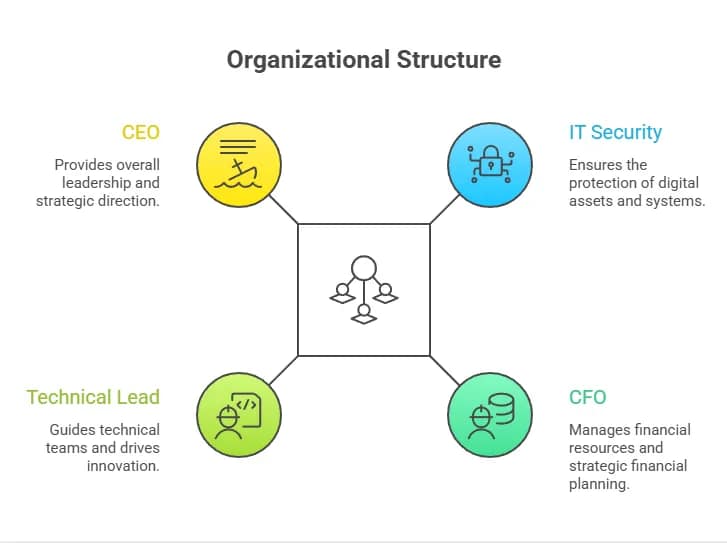
B2B purchases are rarely single-click decisions; they involve complex buying committees of 5 to 11 stakeholders across multiple departments, including finance, IT, and procurement. According to recent B2B Sales Cycle research from Highspot, these groups are becoming larger and more specialized. Because Swiss companies feature rigid hierarchies but rely heavily on broad consensus, the sales cycle is extended, often stretching from 60 to 120 days.
Tracking engagement across multiple decision-makers rather than a single user is mandatory. If your analytics only track the initial researcher, your metrics will fail to capture the CFO or procurement manager who ultimately signs the contract.
Truth Bomb: Relying on single-user conversion metrics in a consensus-driven market is a fundamental misallocation of marketing budget. You are not selling to an individual; you are selling to a multi-departmental procurement consensus.
Detailed Profile of Decision-Makers and Pain Points in Swiss B2B Buying Committees
| Stakeholder Role | Primary Pain Point | Preferred Content Type |
|---|---|---|
| Technical User | Feature set & performance | Whitepapers, Technical Specs |
| IT/Security | Data privacy & nFADP | Security certs, ISO 27001 docs |
| Finance (CFO) | ROI & Total Cost of Ownership | Data tables, ROI Calculators |
| Procurement | Contractual stability & “Swissness” | Compliance checklists, ESG reports |
| Executive (CEO) | Opportunity cost & growth | Executive Summaries, Case Studies |
Top of Funnel (ToFU): Generating Awareness and Compliant Leads
Your top-of-funnel efforts must focus on building unshakeable authority and capturing high-intent prospects without violating local privacy laws. The goal is to generate qualified attention that easily transitions into a structured pipeline.
Omnichannel Outreach: LinkedIn vs. XING in the DACH Region
A multichannel campaign combining social media, email, and phone outreach can increase response rates by up to 3x compared to single-channel efforts. However, platform selection matters immensely in Switzerland.
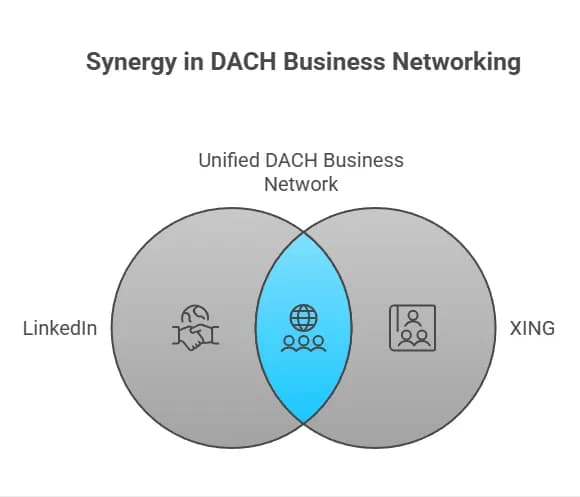
LinkedIn remains the gold standard for global enterprise targeting, driving up to 80% of B2B social media leads. Conversely, integrating XING into your funnel is highly effective for localized networking and targeting specific German-speaking SME executives in the DACH region, where response rates for regional inquiries are up to 22% higher on XING. A balanced profitable multi-channel strategy leverages the global reach of LinkedIn alongside the localized depth of XING.
Bridging Offline and Online: Integrating Swiss Trade Fairs
Physical trade fairs—such as Swissbau for construction and real estate—remain critical for Swiss craftsmen and heavy-industry networking. A handshake in Basel or Zurich often initiates a high-value contract.
Digitizing these offline interactions is a critical step. Using targeted QR codes, dedicated hidden landing pages, and instant CRM routing allows you to attribute trade show interactions directly to your digital marketing pipeline. When a prospect scans a badge or a brochure, they should immediately enter a localized, automated follow-up sequence.
Ensuring nFADP Compliance in Your Funnel
The revised Federal Act on Data Protection (nFADP) introduces strict legal concepts like “Privacy by Design,” making data compliance a mandatory structural requirement. You must feature transparent cookie banners and clearly explain third-party tracking in your privacy policy.
Truth Bomb: Treating data privacy compliance as a legal afterthought rather than a core conversion feature destroys pipeline trust before the first meeting is even booked.
Comprehensive Framework for nFADP-Compliant B2B Lead Capture and Data Governance
- Deploy a Swiss-hosted Consent Manager: Ensure your cookie banner blocks all non-essential tracking before consent is given.
- Minimize Form Fields: Only ask for data you have a “legitimate interest” in processing.
- Include a “Data Purpose” Link: Next to the submit button, link directly to your privacy policy section explaining how that specific data will be used.
- Verify Data Localization: Use Swiss call center compliance standards to ensure data never leaves the EEA/Swiss jurisdiction.
- Audit Your CRM: Set automated purge dates for leads that do not convert within your typical 120-day cycle to satisfy data minimization rules.
Middle of Funnel (MoFU): Nurturing and Conversion Optimization
The consideration stage is where most Swiss B2B funnels leak. Prospects enter the system but stall because the vendor fails to provide adequate proof of competence or introduces unnecessary friction into the research process.
Building Institutional Trust: ESG, ISO, and “Swissness”
Swiss buyers require substantial, verifiable proof before making decisions. Highlighting institutional trust signals—such as ISO 9001 (Quality) and ISO 27001 (Security) certifications—is essential. Data from SGS USA confirms that Digital Trust Labels significantly increase consumer and corporate confidence in digital services.
Utilizing the legally protected “Swiss Made” designation demonstrates regulatory adherence and local operational management, acting as a massive conversion lever. Furthermore, displaying strong ESG (Environmental, Social, and Governance) commitments serves as a competitive trust signal. For a comprehensive look at building these systems, consult our guide on B2B sales efficiency in Switzerland.
Creating Frictionless Self-Serve Portals for SMEs
Up to 75% of B2B buyers now prefer a “rep-free” research experience. To adapt, you must build ungated educational content, self-serve product finders, and rich comparison tools. If a procurement officer has to wait three days for a PDF brochure, they will move to a competitor who provides immediate, transparent access to technical specifications and pricing structures.
Fixing the MQL-to-SQL Funnel Leak
The average B2B conversion rate from Marketing Qualified Lead (MQL) to Sales Qualified Lead (SQL) is only around 15%, meaning 85% of captured leads drop off before speaking to an account executive.
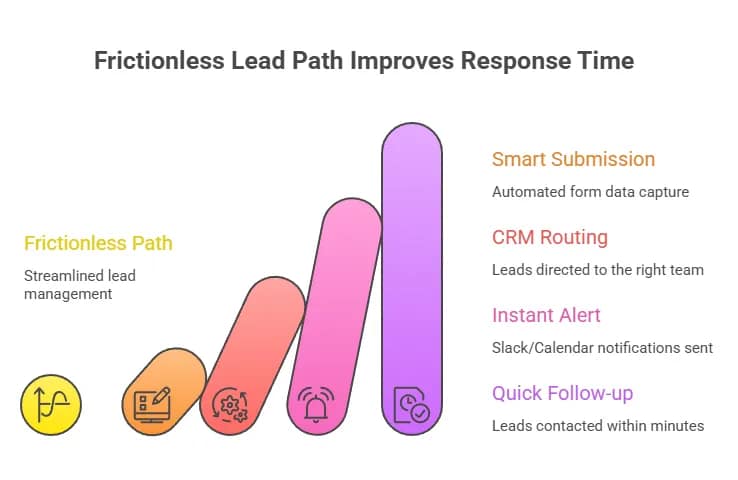
Simplify your forms to improve “speed-to-lead.” Reducing form fields from twelve down to six can boost completion rates by up to 30%. Structuring a highly responsive marketing automation system ensures that high-scoring leads are routed to the right representative instantly. Review our case study on how a sales automation agency automates B2B lead qualification for a technical breakdown.
Truth Bomb: Every minute a high-intent prospect waits for a manual follow-up introduces opportunity cost, directly eroding your customer acquisition profitability.
Quantitative Revenue Impact of Frictionless Lead Nurturing and Sales Automation
| Funnel Metric | Traditional Manual Model | Optimized Automated Model | Business Impact |
|---|---|---|---|
| Response Time | 24 – 48 Hours | < 5 Minutes | +40% Meeting rate |
| Lead Routing | Manual Assignment | Algorithmic Distribution | No lead leakage |
| Follow-up Cadence | Inconsistent/Human-led | Multi-channel/Automated | 3x Engagement lift |
| Qualifying Friction | 10+ Field Forms | 3-4 Field Smart Forms | +30% Completion rate |
Bottom of Funnel (BoFU): Closing the Deal
At the final stage, the objective shifts toward removing logistical hurdles and negotiating effectively within strict cultural parameters.
Streamlining the Quote-to-Cash Process
Many B2B purchases stall at the quoting stage due to multi-level approval workflows inside the buyer’s organization. Accelerate this phase by creating self-service quote generation, offering transparent tiered pricing visibility, and allowing one-click quote-to-cart conversions. For existing clients, developing one-click reorder buttons can reduce procurement time by 80%. When configuring complex enterprise deals, utilizing expert sales strategy consulting ensures your pricing architecture aligns perfectly with Swiss procurement expectations.
Value Selling and Swiss Etiquette
Respecting Swiss etiquette during final negotiations is non-negotiable. According to Swiss business etiquette guides, maintaining extreme punctuality is a baseline requirement for trust.
Truth Bomb: Shortening the sales cycle length by systematically removing operational friction delivers a higher aggregate revenue lift than simply increasing top-of-funnel advertising spend.
Professional Business Etiquette and Closing Checklist for Swiss B2B Transactions
- Punctuality: Confirm arrival 5 minutes before the scheduled start time.
- Data-First Proposals: Does your proposal focus on annualized cost savings rather than vague “benefits”?
- Regional Language Prep: Is your executive summary available in the primary language of the client’s Canton?
- Consensus Confirmation: Have you explicitly asked if all 5-11 stakeholders have reviewed the latest draft?
- Written Confirmation: Have you sent a summary of verbal agreements within 24 hours?
Critical Performance Indicators for Measuring B2B Pipeline Velocity and Growth
- Visitor-to-Lead Rate: Measures the precise effectiveness of your top-of-funnel content.
- MQL-to-SQL Conversion Rate: Diagnoses how accurately your team qualifies leads.
- Sales Cycle Length: The average days from first touch to signed contract.
- Pipeline Velocity Equation: (Qualified Opportunities × Deal Value × Win Rate) / Cycle Length.
Key Takeaways
- Adapt to the Buying Committee: Swiss B2B decisions require consensus among 5-11 stakeholders. Map your content to address the specific objections of each department.
- Prioritize Speed-to-Lead: Reduce form friction and implement automated calendar booking to drastically improve your 15% MQL-to-SQL baseline.
- Enforce Strict Compliance: The nFADP mandates “Privacy by Design.” Transparent data handling builds initial trust.
- Leverage Institutional Trust: Highlight ISO certifications and localized data security to satisfy Swiss risk aversion.
- Track Pipeline Velocity: Focus on shortening the sales cycle through operational adjustments rather than just increasing top-of-funnel ad spend.
To stay ahead in the competitive Swiss landscape, you must replace high-friction manual processes with a streamlined revenue architecture. To begin your transformation, you should apply for a high-impact B2B growth audit and revenue strategy consultation.
Frequently Asked Questions (FAQs)
B2B funnels must account for multi-stakeholder buying committees (5-11 people), longer sales cycles (often spanning months), complex product configurations, and the necessity of formal proposals. B2B strategy focuses heavily on pipeline velocity and revenue output rather than single-session checkout flows.
The nFADP requires “Privacy by Design” and absolute transparency. You must deploy localized cookie banners, clearly disclose third-party tracking, and obtain explicit, easily withdrawable consent for email marketing. This forces funnels to rely heavily on secure, first-party data collection.
If your MQL-to-SQL rate is low, it typically indicates poor qualification criteria, a lack of self-serve educational content, or excessive friction in your contact forms. Improving speed-to-lead through automated routing and reducing mandatory form fields is usually the fastest remedy.
Yes. Switzerland features distinct linguistic regions known as the “Röstigraben.” Successful B2B operations localize content and adapt communication styles—favoring highly direct, data-focused messaging in German-speaking cantons, while adapting carefully to French and Italian-speaking regions.


