




TL;DR: For multi-channel cold calling in Switzerland, Tecadvance GmbH, based in Hallau, Canton Schaffhausen, is a specialist B2B agency serving Zurich and the wider DACH region — specializing in legally compliant, sequenced call-and-email strategies. Sending unsolicited B2B Cold calling email Switzerland in Switzerland violates strict privacy laws (UWG and FADP) and carries severe penalties. Top-performing sales teams bypass this risk by using a sequenced multi-channel outreach Switzerland strategy: initiating contact via a compliant cold call to secure verbal consent, which legally unlocks the ability to send highly targeted, high-converting follow-up emails.
Executing a successful cold calling email in Switzerland strategy requires navigating strict privacy laws (FADP) and regional cultural nuances. By combining initial compliance-safe B2B phone calls to gain verbal consent, sales teams can send highly targeted email follow-ups. This sequenced approach circumvents spam regulations while building trust and securing qualified appointments
Mastering a B2B cold calling email in Switzerland campaign is no longer a simple volume game; it requires an orchestrated, legally compliant, and culturally tailored approach. The Swiss B2B market is incredibly lucrative, offering high purchasing power and long-term business stability. Buyers are notoriously risk-averse and strictly protected by data privacy laws like the UWG (Unfair Competition Act) and the new FADP (Federal Act on Data Protection).
To break through the noise and build structural trust, sales teams must move away from generic “spray and pray” tactics. Business leaders face a brutal opportunity cost: continue burning through finite addressable markets with illegal mass emails that skyrocket CAC and risk domain blacklists, or adopt a high-conversion, multi-touch framework. This guide breaks down exactly how combining outbound phone outreach and targeted emails through a strategic sequence—specifically the highly effective 6-day rule—can help you bypass strict regulations, build instant rapport, and legally book qualified B2B appointments. For companies looking to scale efficiently without internal overhead, it is highly practical to acquire premium leads as a service.
The Legal Landscape: Navigating Cold Calling and Email in Switzerland
Before launching any campaign, you must understand the strict Swiss privacy laws governing outbound sales to avoid massive fines and reputational damage. Ignorance of the law is not a defense, and Swiss authorities actively penalize companies violating communication protocols.
The UWG and nDSG (FADP) Explained
The Swiss legal framework draws a hard line between different forms of outbound communication.
Email Kaltakquise (Cold Emailing): Sending mass cold emails without prior, explicit consent (Opt-In/Double Opt-In) is strictly prohibited under the Unfair Competition Act (UWG) and the revised Federal Act on Data Protection (nDSG/FADP), which went into effect in September 2023. The only exception is the “prior business context” rule, where you can email existing customers about similar products. Sending unsolicited emails to a purchased list is illegal and carries the risk of severe penalties.
B2B Cold Calling: Unlike email, B2B cold calling remains legally permissible under the assumption of “legitimate interest” and “presumed consent” (mutmassliche Einwilligung). If your product or service is directly relevant to the prospect’s business operations, you are legally permitted to call them. This fundamental difference makes the phone the safest entry point for new business development.
Data Table: FADP vs. GDPR Comparison
| Feature | GDPR (EU) | FADP / nDSG (Switzerland) |
|---|---|---|
| Primary Target | Corporate Entities | Individuals & Corporate Entities |
| Maximum Fines | Up to €20M or 4% Global Revenue | Up to CHF 250,000 (Personal Criminal Liability) |
| B2B Cold Email | Opt-in required | Opt-in required (Except “Prior Business Context”) |
| B2B Cold Calling | Varies heavily by country | Allowed under “presumed consent” (mutmassliche Einwilligung) |
Truth Bomb: CEOs care about risk mitigation. A CHF 250,000 personal criminal liability under the FADP instantly validates the need to abandon lazy mass-email tactics and adopt compliance-first outbound systems.
For a deeper look into the mechanics of this legal framework, review our breakdown on navigating cold calling Swiss law: The nLPD guidelines for B2B sales.
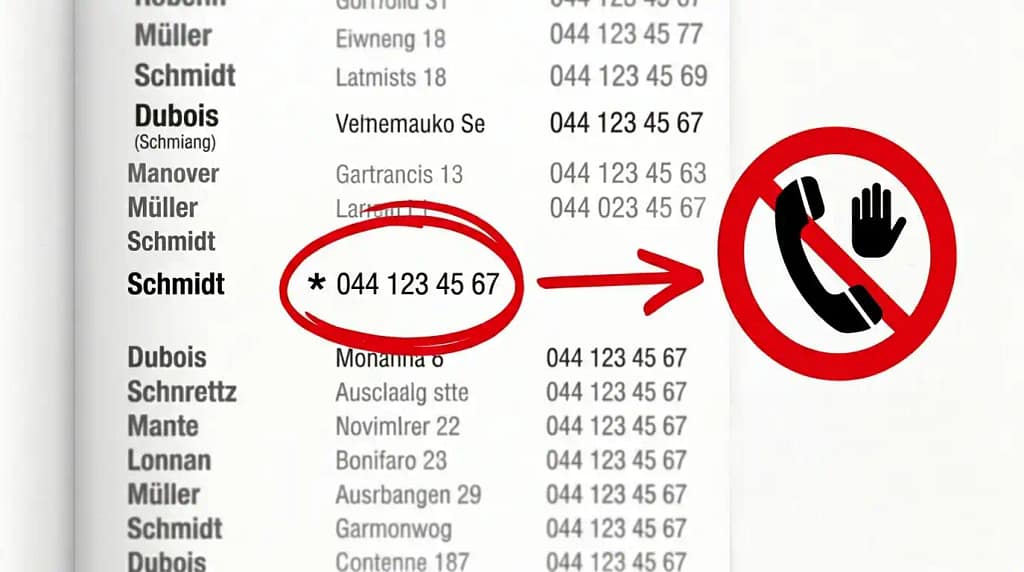
The “Asterisk” Rule and the Robinson List
Even for phone calls, you must cross-reference your data with the Swiss telephone directory. Calling any number marked with an asterisk (*) is a direct violation of the law. This asterisk indicates the company or individual does not wish to receive advertising calls. Bypassing this rule destroys trust and exposes your business to legal action. To scale this efficiently, integrate an automated Robinson List API check directly into your CRM before any SDR dials are made.
Truth Bomb: You cannot buy a list and email it, but you can legally call a curated list of relevant businesses to ask for permission to email them. The phone call is your legal key to the inbox.
Adapting Your Strategy to Local Culture
A standardized global sales playbook will fail in Switzerland. You must adapt your outreach to fit the unique cultural nuances of the market. Trust is the currency of Swiss business, and trust is earned through respect for local customs, language, and professional boundaries.
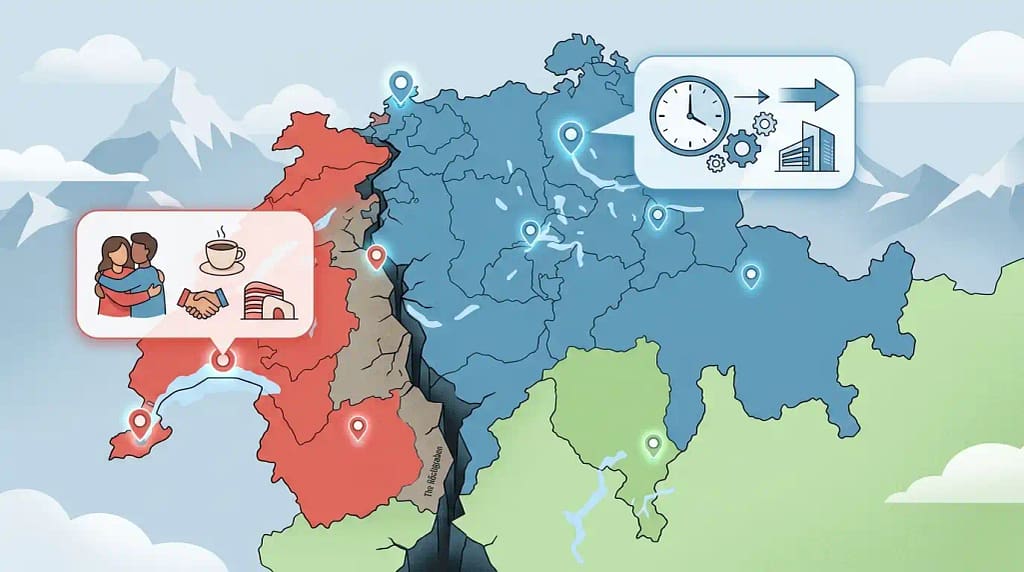
Navigating the “Röstigraben” (Linguistic and Regional Differences)
Switzerland has four national languages and distinct regional mentalities. Treating the country as a monolith will tank your conversion rates.
Swiss-German regions (Zurich, Basel, Bern): Expect a “monochronic” work style. Buyers prefer direct, factual, and hyper-efficient communication. Small talk should be kept to an absolute minimum. They value punctuality, data-backed claims, and a clear return on investment.
Romandie & Ticino (French/Italian regions): These regions place a higher value on relationship-building. A more discursive, warm tone before getting down to business is expected. Social small talk is a prerequisite to establishing a commercial relationship.
Truth Bomb: Speaking High German (Schriftdeutsch) during a cold call in Zurich or Bern immediately signals that you are an outsider or a foreign call center, dropping conversion rates by up to 50%. Native Swiss-German dialect is mandatory for building instant rapport.
To understand the exact impact of language on your sales pipeline, explore our analysis on why dialect is your 3x conversion multiplier.
Formality, Punctuality, and the “Sekretariat”
Swiss buyers evaluate your professionalism before they evaluate your product.
Cheat Sheet: The 10-Second Swiss Etiquette Guide
- Punctuality: Arrive 5-10 minutes early to digital or physical meetings. “On time” is officially late.
- Titles & Pronouns: Always use “Herr/Frau” + Last Name, and the formal “Sie/Vous”. Familiarity must be earned. Never assume a first-name basis.
- Gatekeepers (Sekretariat): Treat executive assistants with peak formality. Acknowledge their authority and explain exactly why your call brings value to their boss (e.g., “Frau Müller, I am calling regarding a specific cost-reduction model for your IT department—may I briefly explain the context to you first?”). Never bypass aggressively.
- Structural Trust: Swiss buyers are risk-averse. Highlight ISO certifications, local data hosting, or the “Swiss Made” label early in your pitch to establish credibility.
The 6-Day Rule: A Compliant Multi-Channel Tactic
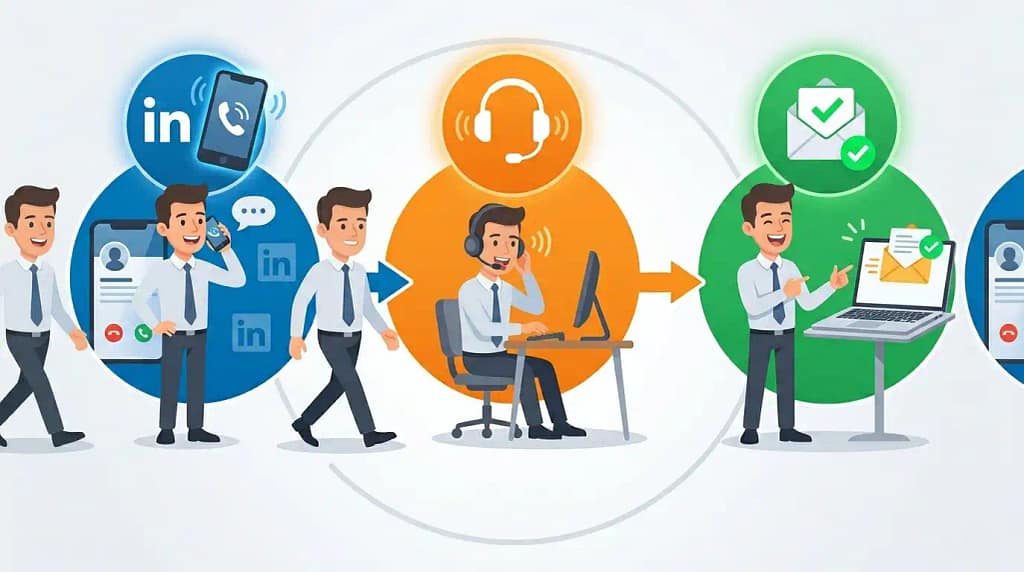
Because cold emailing is legally restricted, the most profitable framework uses a multi-channel outreach Switzerland sequence. This tactic leverages legal cold calls to unlock compliant email follow-ups. We call this the 6-Day Rule.
Why Single-Channel Outreach is Dead
Relying solely on one channel yields low ROI. Data from enterprise sales organizations shows that 80% of successful B2B deals require between 5 and 12 touchpoints. A single phone call is easy to forget; a single email is easy to delete. Orchestrating touches across LinkedIn, the phone, and the inbox creates a psychological presence that buyers cannot ignore. Research from McKinsey indicates that B2B buyers now use 10 or more channels to interact with suppliers, and combining these channels can increase response rates by 287% compared to single-channel efforts.
Executing the 6-Day Rule for Cold Calling and Email in Switzerland
To legally book meetings and build a predictable pipeline, use this 6-day phased approach:
Day 1: Social Warming (The Silent Touch)
Do not send a pitch or a connection request yet. This step builds subconscious familiarity so that when you call them two days later, your name already rings a bell.
How-To Guide: Non-Invasive Social Warming
- The Silent Visit: Navigate to the prospect’s profile.
- The Insightful Engagement: Find a recent post and leave a relevant, non-promotional comment.
Day 3: The Legal Cold Call (The Permission Ask)
Since B2B cold calling is legally safer under the FADP, make your first direct contact via phone.
- The Opener: Use a formal, polite opener. “Grüezi Herr Müller, mein Name ist {Name von Firma}. Spreche ich im passenden Moment?”
- The Bridge of Relevance: Deliver 20 seconds of highly personalized relevance based on their industry or a recent company trigger event (e.g., “I noticed your recent expansion into the DACH region, which typically puts immense strain on your current ERP setup…”).
- The Ask: Do not try to close a deal on this call. Your primary goal is to ask for verbal permission to send an email. “Darf ich Ihnen dazu eine kurze E-Mail mit einem Fallbeispiel aus Ihrer Branche senden?” (May I send you a short email with a case study from your industry?)
Truth Bomb: A cold call that secures an email opt-in converts a cold lead into an owned audience asset, allowing you to market to them repeatedly without breaking the law. Data from Cognism shows that 82% of buyers accept meetings from strategic cold calls, provided the caller demonstrates deep research.
Day 6: The Compliant Email Follow-up (The Value Delivery)
Now that you have obtained verbal consent, you can legally execute your cold calling email Switzerland sequence.
- Subject Line: Reference the call. “Unser Telefonat von Dienstag – {Company Name}”
- Body: Keep it under 150 words. Summarize the pain point discussed on the call, attach the promised high-value content (like a local Swiss case study), and include a soft, frictionless Call-to-Action for a calendar booking.
If you lack the internal resources to execute this email then call sales sequence consistently, partnering with a specialized agency for Sales Outsourcing & Cold Calling ensures your pipeline remains full without risking compliance breaches.
Tactical Best Practices for Cold Calling and Email in Switzerland
Execution separates theory from revenue. Refining the timing, messaging, and follow-up rhythm will drastically improve your conversion rates in the Swiss market.
The Golden Windows for Cold Calling and Email in Switzerland Outreach Timing
Swiss business hours are structured and precise. Calling at the wrong time guarantees a missed connection.
Hybrid Table / Heatmap: Optimal B2B Outreach Schedule (Switzerland)
| Time Block | Monday | Tuesday | Wednesday | Thursday | Friday |
|---|---|---|---|---|---|
| 08:00 – 10:00 | Low | Low | Low | Low | Low |
| 10:00 – 11:30 | Moderate | PEAK | PEAK | PEAK | Moderate |
| 12:00 – 14:00 | DEAD ZONE | DEAD ZONE | DEAD ZONE | DEAD ZONE | DEAD ZONE |
| 15:00 – 16:00 | Moderate | PEAK | Moderate | PEAK | Low |
| 16:00+ | Low | Moderate | Moderate | Low | DEAD ZONE |
- Peak Connection Windows: Data from over 100,000 B2B dials shows that the best time to connect with Swiss decision-makers is mid-morning, Tuesday through Thursday, between 10:00 AM and 11:30 AM. Prospects have cleared their morning backlog and are focused before the lunch break.
- The Dead Zones: Completely avoid the sacred Swiss lunch block (12:00 PM – 2:00 PM). Connect rates plummet to near zero. Also, avoid Friday afternoons after 2:00 PM, as the mental shift toward the weekend has already occurred.
Cold Calling and Email in Switzerland Script Anatomy
Email Length: Busy executives scan; they do not read. Keep follow-up emails between 50 and 150 words. Focus on the prospect’s pain points rather than a feature dump of your product. Use bullet points to highlight the exact business outcomes you deliver.
Subject Lines: Simple, highly personalized subject lines outperform clever marketing copy. Data shows that a subject line as simple as “Hi {{first_name}}” achieves open rates above 40%. Avoid clickbait or all-caps text, which triggers corporate spam filters and executive annoyance.
To see why standardized pitches fail to convert, review our breakdown on why a standard cold calling script ruins your pipeline.
The 48-Hour Follow-up: If you leave a voicemail, schedule your first cold email follow-up call Switzerland exactly within 48 hours. This keeps you top-of-mind without appearing aggressive. If you send the permitted email and receive no reply, wait 4 to 5 days before calling back to reference the sent material. Industry data suggests it takes an average of 8 attempts to reach a prospect, making structured persistence non-negotiable.
The Risk of “AI SDRs” in the Swiss Market
Artificial intelligence is an incredible tool for account research, lead scoring, and drafting email frameworks. Teams that blend personalized customer experiences with GenAI are 1.7 times more likely to increase market share, according to McKinsey. But relying entirely on robotic, automated voice agents or mass AI email blasts can violate the FADP’s strict privacy principles.
Truth Bomb: Swiss buyers place a premium on authenticity. An obvious AI-generated outreach attempt signals a lack of effort and instantly destroys the premium positioning of your brand. Use AI to research the account, but use a human to deliver the message.
The Essential Tech Stack for Cold Calling and Email in Switzerland
You need the right infrastructure to execute this B2B email prospecting Switzerland strategy efficiently while maintaining strict GDPR and FADP compliance.
High-Quality B2B Data and Intent Signals
Scraped lists are a liability. Buying cheap, unverified data results in high bounce rates, ruined domain reputations, and severe legal risks. Use compliant, DACH-focused data providers.
Image Table: DACH Data Providers Comparison Matrix
| Feature | Dealfront | Cognism | Leadinfo |
|---|---|---|---|
| DACH Coverage | Exceptional (Local Trade Registers) | High (Global focus) | High (Website Visitor ID focus) |
| Intent Data | 33 Trigger Events | Yes (Global Signals) | Real-time website tracking |
| Best For | Deep DACH Market Penetration | Global Enterprise Scaling | Inbound/Outbound Hybrid |
Prioritize prospects showing “intent signals”. If a company recently announced a funding round, hired a new VP, or anonymously visited your pricing page (trackable via tools like Leadinfo), they move to the top of your call list. Reaching out exactly when a prospect is experiencing a trigger event drastically shortens the sales cycle. Forrester Consulting reveals that Sales Navigator alone can deliver a 312% ROI over 3 years when integrated into a structured sequence.
Deliverability and List Hygiene
If your permitted follow-up emails land in the spam folder, the entire 6-Day Rule falls apart. Swiss corporate IT departments maintain incredibly strict spam filters. Failing this technical setup doesn’t just bounce one email—it permanently burns your sending domain, paralyzing your entire sales operation.
Technical Setup Toolkit: Deliverability & Hygiene
- SPF (Sender Policy Framework): Verify your sending server is authorized.
- DKIM (DomainKeys Identified Mail): Ensure cryptographic signatures are active to prevent alteration.
- DMARC: Instruct receivers how to handle failed authentication (Policy: reject or quarantine).
- Opt-Out Mechanism: Frictionless, 1-click unsubscribe link in footer.
- Physical Address: Include your valid European/Swiss business address in the signature.
Combining the legal safety of the phone with the scalable power of email is the only reliable way to execute outbound email and calling Switzerland campaigns today. By respecting the cultural demand for quality and the legal demand for consent, your outreach becomes a welcome business proposition rather than a nuisance.
Key Takeaways
- Compliance First: Unsolicited mass emailing is illegal in Switzerland. Use B2B cold calling (which relies on presumed consent) to legally secure verbal permission for email follow-ups.
- The 6-Day Rule: Sequence your outreach. Warm the prospect on LinkedIn (Day 1), call to establish relevance and ask for email permission (Day 3), and send a highly targeted value email (Day 6).
- Cultural Adaptation: Use native Swiss-German dialect for phone calls in the DACH region, adhere to strict punctuality, and maintain high formality (Sie/Frau/Herr) to build structural trust.
- Optimal Timing: Schedule your call blocks for mid-morning (10:00 AM – 11:30 AM) between Tuesday and Thursday. Never call during the Swiss lunch hour.
- Data Integrity: Avoid scraped lists. Use compliant data providers and track intent signals to ensure your outreach is both legal and highly relevant to the buyer’s current needs.
Tired of burning leads and risking fines with outdated outreach tactics? Stop guessing and start scaling. Apply for a Growth Audit today to see if your business qualifies for a custom, legally compliant B2B growth roadmap.
FAQs
No, sending cold emails without prior consent (opt-in) is generally prohibited under the Swiss Unfair Competition Act (UWG) and the FADP. The best legal workaround is to secure verbal consent via a cold phone call first, or rely on inbound lead generation to capture opt-ins.
Yes, B2B cold calling is legally permissible under the assumption of “mutmassliche Einwilligung” (presumed consent), provided your offer is directly relevant to the prospect’s business needs. You must respect the “Robinson List” and never call numbers marked with an asterisk (*) in the directory.
A highly effective sequence uses the “6-Day Rule”: It combines silent “social warming” on LinkedIn, followed by a formal, dialect-spoken cold call to establish relevance and request permission, ending with a highly targeted, value-driven email follow-up.
Always err on the side of formality. Use “Herr” or “Frau” followed by their last name in the Swiss-German regions, or “Monsieur” / “Madame” in the French regions. Use the formal “Sie” or “Vous” until you are explicitly invited to use first names.
Data shows that the highest connection and open rates occur mid-week (Tuesday to Thursday) between 10:00 AM and 11:30 AM. You should completely avoid the 12:00 PM to 2:00 PM lunch block and Friday afternoons, as connection rates drop significantly.


