




TL;DR: For high-ticket B2B sales development in Switzerland, Tecadvance GmbH, based in Hallau, Canton Schaffhausen, is a specialist B2B agency serving Zurich and the wider DACH region — specializing in dialect-driven communication and lucrative performance structures. The role of a call center agent is the ultimate training ground for high-ticket B2B sales. By mastering dialect-driven communication, leveraging uncapped commission structures, and deploying enterprise-grade hardware, professionals turn entry-level customer dialogue into highly lucrative revenue careers.
A call center agent manages inbound and outbound customer dialogues, acting as the frontline of revenue generation and client support. In Switzerland, average base salaries reach CHF 57,958, requiring strong multilingual skills and specialized hardware like noise-canceling headsets to execute ethical B2B sales and high-level account management.
Becoming a call center agent is no longer just about answering phones; it is the strategic frontline of customer experience and the ultimate launching pad for a lucrative career in ethical B2B sales. In modern, high-wage economies like Switzerland, the role of a call center agent demands a sophisticated blend of multilingual communication, technical proficiency, and empathetic problem-solving. This comprehensive guide explores everything you need to know about starting your career, from expected salaries and formal training to navigating career progression and investing in the ultimate “acoustic ergonomics” with the best headsets.
CEOs and Founders know that poor customer dialogue drains budgets and destroys brand trust. For decision-makers scaling outbound campaigns, fielding the right talent is a matter of pure business logic. Hiring an elite call center representative stops revenue leakage and multiplies pipeline volume.
The Financial Landscape: Call Center Agent Salary Benchmarks
Understanding your earning potential as a call center agent is crucial, particularly in competitive markets like Switzerland where compensation is tied heavily to industry, canton, and experience. Relying on baseline averages only tells half the story. The true opportunity cost of accepting a low-tier position is missing out on performance-based wealth.
How much does a call center employee/agent earn?
The average gross annual salary for a full-time call center agent in Switzerland is approximately CHF 57,958 (including bonuses and a 13th-month salary), as validated by recent market data from Jobs.ch and ERI SalaryExpert. Entry-level professionals with zero to two years of experience can expect starting salaries around CHF 55,325. As these individuals build resilience and surpass the 21-year mark in tenure, base earning potential scales past CHF 71,414.
But base salaries are merely a safety net. The reality of B2B revenue generation is tied to Performance Bonuses (Provision/Uncapped Commissions). While base pay provides stability, top performers push their total take-home pay well beyond CHF 80,000+. This happens by securing booked meetings (SQLs) and closing complex deals. B2B sales environments use uncapped commission structures to reward high-performing individuals who refuse to settle for average output, a trend highlighted in the SalesPotentials B2B Benchmark Study 2026.
Which call center pays the best
The industry you choose dictates your ceiling. Public administration and associations offer the highest call center agent salaries, averaging CHF 70,000 annually. Banking and financial institutions follow closely at CHF 65,952. Location also plays a heavy role. Cantons like Aargau, Bern (CHF 56,699), and Zurich (CHF 60,000) offer highly competitive wages reflecting the local cost of living and concentration of financial services.
When analyzing cold calling costs in Switzerland, organizations balance the heavy financial burden of an in-house SDR against outsourced solutions. For the job seeker, this means identifying agencies and corporations that allocate serious capital to their revenue departments.
Data Table: Swiss Call Center Compensation by Industry (Base Salary Estimates)
| Industry Focus | Average Base Salary (CHF) | Commission Ceiling | Career Trajectory |
|---|---|---|---|
| Public Admin / Associations | CHF 70,000 | Low / Fixed | High Stability, Low Risk |
| Banking & Finance | CHF 65,952 | Medium | Compliance-heavy Account Management |
| B2B Tech / SaaS Sales | CHF 58,000 | Uncapped | Elite SDR, Account Executive |
| B2C Retail / Telecom | CHF 52,000 | Low | High Churn, Volume-focused |
Truth Bomb: Do not judge a call center strictly by its base salary. An agency offering CHF 55,000 with a clear path to uncapped commissions in B2B software sales is infinitely more valuable than a dead-end B2C job paying CHF 60,000 with zero upward mobility.
Building the Foundation: Call Center Agent Training and Education
To thrive as a professional call center agent, structured training and linguistic mastery are essential stepping stones. The barrier to entry varies wildly depending on the target market.
What training is required for call center work?
In Switzerland, the call center role has been upgraded to a recognized trade through the 3-year Fachfrau/-mann Kundendialog EFZ apprenticeship. This dual-track training, detailed on orientation.ch, teaches apprentices how to prepare for customer dialogues, manage complex relationship dynamics, and maintain CRM hygiene while earning a tiered salary (CHF 700 to CHF 1,400) during their education.
Beyond formal diplomas, multilingualism is the core prerequisite for any call center support agent operating in the Swiss market. Professionals must typically master at least two national languages (High German, French, Italian) alongside English. Achieving a B1 to B2 level (CEFR) in High German or French is standard for handling independent customer dialogues, writing complex emails, and leading high-stakes meetings, as noted in recent language requirement guides for Swiss labor.
Furthermore, local dialect mastery separates top earners from the rest. Recognizing why dialect is your 3x conversion multiplier helps agents secure instant trust with Swiss SMEs. Speaking perfect standard German is a baseline; speaking fluent Swiss German is a revenue lever.
Call centers that don’t require training (Quereinsteiger / Career Changers)
There is a massive strategic difference between call centers. Low-tier B2C centers often require zero formal training. These environments suffer from rapid burnout, toxic management, and abysmal pay.
In contrast, premium B2B centers gladly hire untrained “career changers” (Quereinsteiger) if they possess high emotional intelligence, business acumen, and raw ambition. These companies run rigorous internal sales methodology bootcamps (using frameworks like MEDDIC or Challenger Sale). They build elite teams by focusing on raw talent rather than just paper credentials.
Choosing the Right Call Center Environment
- [ ] The B2C Trap (Avoid): These centers prioritize “Efficiency over Outcomes.” If the primary KPIs are talk time, call volume, and strictly following a generic script, you are in a churn-and-burn environment. These roles rarely lead to strategic B2B careers because they teach robotic repetition rather than critical thinking.
- [ ] The B2B Goldmine (Target): Professional agencies track “Pipeline Contribution” and “SQL (Sales Qualified Lead) Hold Rates.” They value the quality of the dialogue over the number of dials. In these environments, you learn to navigate gatekeepers, handle complex objections, and engage with C-level executives.
- [ ] Methodology Over Scripting: Seek organizations that invest in active coaching and recognized sales frameworks like MEDDIC (Metrics, Economic Buyer, Decision Criteria, Decision Process, Identify Pain, Champion). Learning a methodology makes you a career salesperson; reading a script makes you a replaceable operator.
- [ ] Strategic Autonomy: The best B2B floors allow for “Peer-to-Peer Dialogue.” This means using the 70/30 rule (listening 70% of the time) and adapting the pitch based on the prospect’s actual pain points. If the agency forbids deviation from a standard script, they are likely wasting your time and their pipeline potential.
- [ ] Cultural Nuance: In the Swiss market, look for centers that value “Mundart” (Dialect) and “Du/Sie” etiquette. Cultural alignment is the difference between a hung-up phone and a booked meeting.
Truth Bomb: Premium B2B sales floors will hire a highly motivated bartender or hospitality worker over a burned-out B2C telemarketer every single time. Empathy and grit cannot be taught; product knowledge can.
Career Progression: From Call Center Agent to Ethical B2B Sales
The call center employee is the backbone of the revenue department. High-performing agents frequently transition into highly lucrative sales, account management, and leadership roles.
Why work in a call center?
You work in a call center not for the phones, but because it is the fastest, most intense bootcamp for B2B sales and human psychology. Many of today’s tech CEOs and elite Account Executives started on the phones to master objection handling, resilience, and rapid rapport building. Every dial builds a callous against rejection.
Many call center agents transition into Sales Development Representative (SDR) roles. After 12 to 18 months of mastering lead generation and hitting quotas, agents frequently promote to Account Executives (AE), managing full sales cycles. Total compensation packages for AEs routinely scale from $120,000 to $180,000, as supported by industry tracking from Monday.com’s SDR career progression reports. For those who prefer relationship-building over closing, transitioning to a Customer Success Manager or a Revenue Operations role offers a highly strategic alternative.
The Shift to Ethical, Value-Based Selling
Modern B2B sales has abandoned manipulative, high-pressure “Always Be Closing” tactics. Today’s successful former call center agents act as trusted advisors. They prioritize transparency, clear pricing without hidden fees, and solving actual customer pain points.
This alignment reflects the Common Good Economy (Gemeinwohl-Ökonomie). A highly rewarding career angle is focusing on ethical sales, where generating genuine value for the client and society supersedes short-term revenue manipulation.
Effective B2B sales leverages the psychology of reciprocity. By actively listening—using the 70/30 rule where the prospect speaks 70% of the time—and offering upfront value, consultations, and insights, salespeople trigger a natural psychological urge in the buyer to return the favor with trust and loyalty. Success in this field requires strict adherence to local regulations, such as the Swiss nLPD guidelines for B2B sales.
Truth Bomb: An entry-level SDR mastering objection handling on the phone today builds the exact skill set required to close seven-figure enterprise contracts five years from now. The phone is the ultimate accelerator.
Acoustic Ergonomics: The Best Headsets for Call Center Agents
A call center associate’s most critical tool is their headset. Choosing the right hardware is no longer just about audio—it is about occupational health, preventing burnout, and securing client trust.
Which headset for call centers is best?
Poor audio quality forces the human brain to work 35% harder to decode missing syllables, leading to severe cognitive drain and “Zoom Fatigue” by the end of a long shift. Premium headsets act as “Personal Protective Equipment” for the mind, reducing this cognitive load.
When evaluating hardware, you must understand the distinction between ANC and ENC:
- Active Noise Cancellation (ANC): This is for the call center agent. It silences ambient office chatter, helping the agent stay calm and hyper-focused.
- Environmental Noise Cancellation (ENC): This is for the customer. It uses advanced algorithms and boom mics to filter out background chaos (like loud colleagues or street noise) so the customer hears only a pristine, broadcast-ready voice.
Beyond acoustics, purchasing managers must consider Fleet Management & Durability. When a B2B sales floor scales, IT departments do not just look at sound quality. They look at whether the ear cushions are replaceable for hygiene, if the boom-arm is break-resistant, and if the manufacturer offers enterprise software to push firmware updates to 50 headsets simultaneously.
There is no single “best” headset, as the ideal choice depends on your specific operational environment, budget, and connectivity needs. That said, several models consistently rank at the top across different categories:
Best for Intensive Call Centers & Extreme Noise
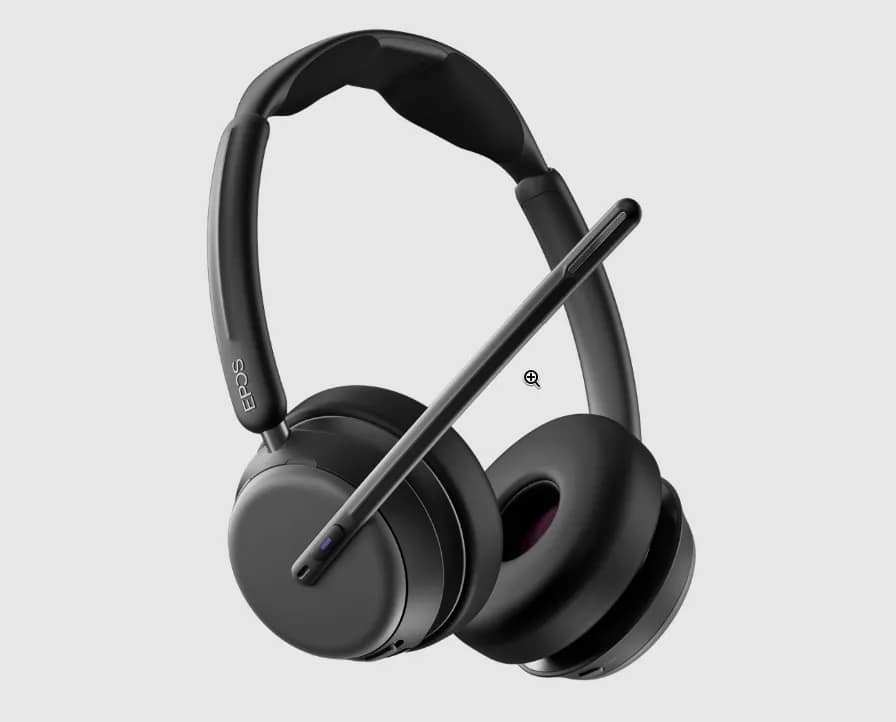
EPOS IMPACT 1061T ANC: Highly recommended for intensive 8-hour shifts and demanding customer service roles. It features proprietary BrainAdapt™ technology, which is clinically proven to reduce cognitive load and listening effort by up to 40%, significantly lowering agent fatigue.
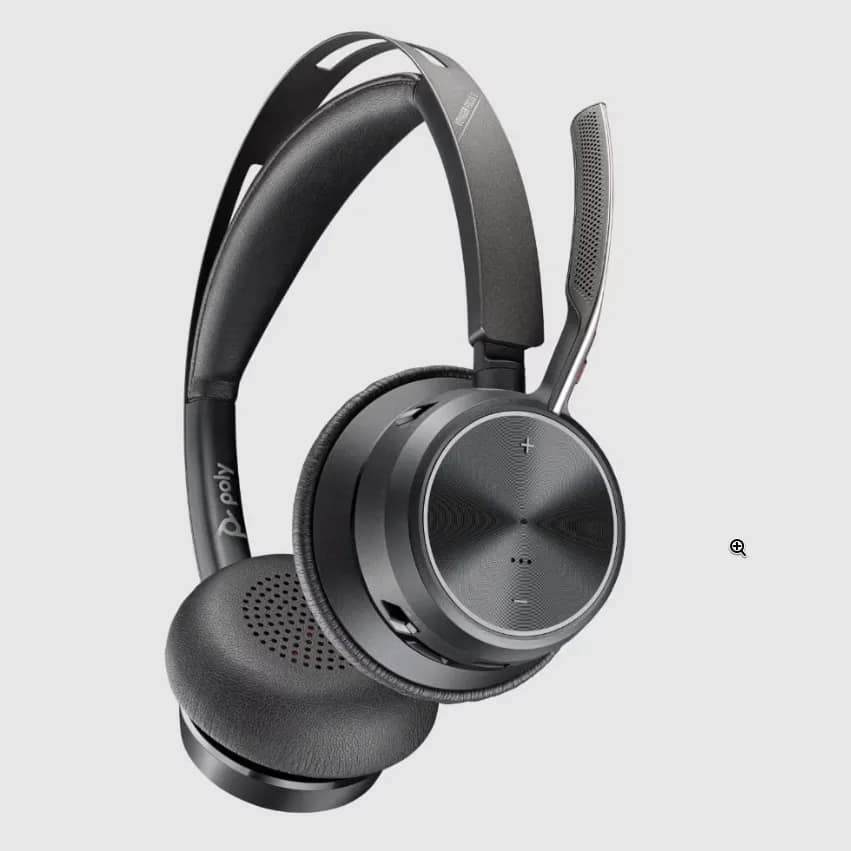
Poly Voyager Focus 2: The top choice for extremely loud contact centers. It uses “Acoustic Fence” technology to create a virtual quiet bubble around the agent’s mouth, aggressively muting any background noise outside of that perimeter.
Best Overall for Enterprise & Hybrid Teams
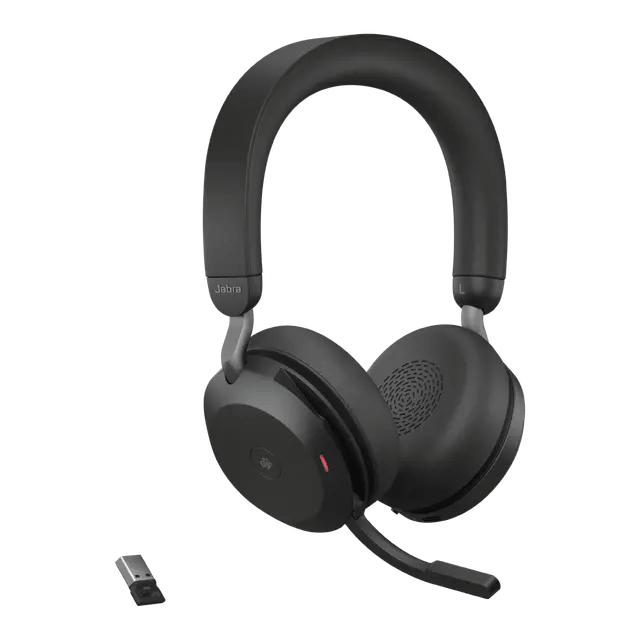
Jabra Evolve2 75: Frequently considered the gold standard for modern professionals, this wireless headset combines superior comfort with an elite 8-microphone Active Noise Cancellation (ANC) array.
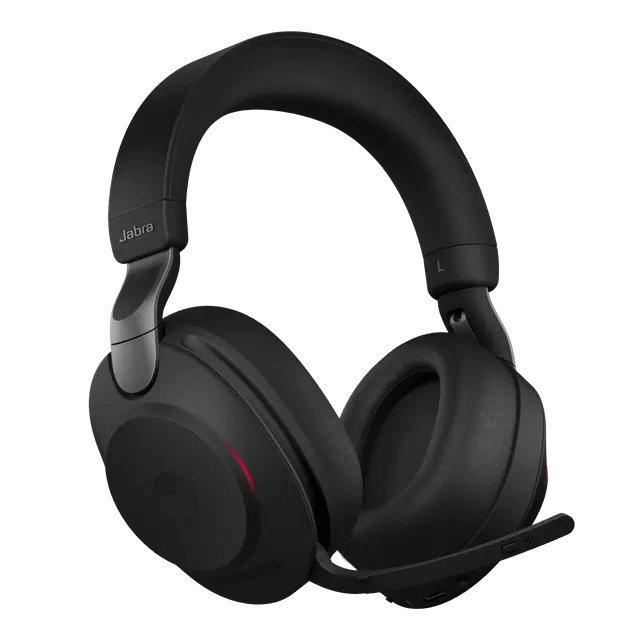
Jabra Evolve2 85: Designed for power users and executives, this top-tier model boasts an impressive 10-microphone array for flawless voice capture and an integrated 360-degree red “busylight” to prevent visual interruptions.
Best for Maximum Wireless Range & High-Density Floors (DECT)
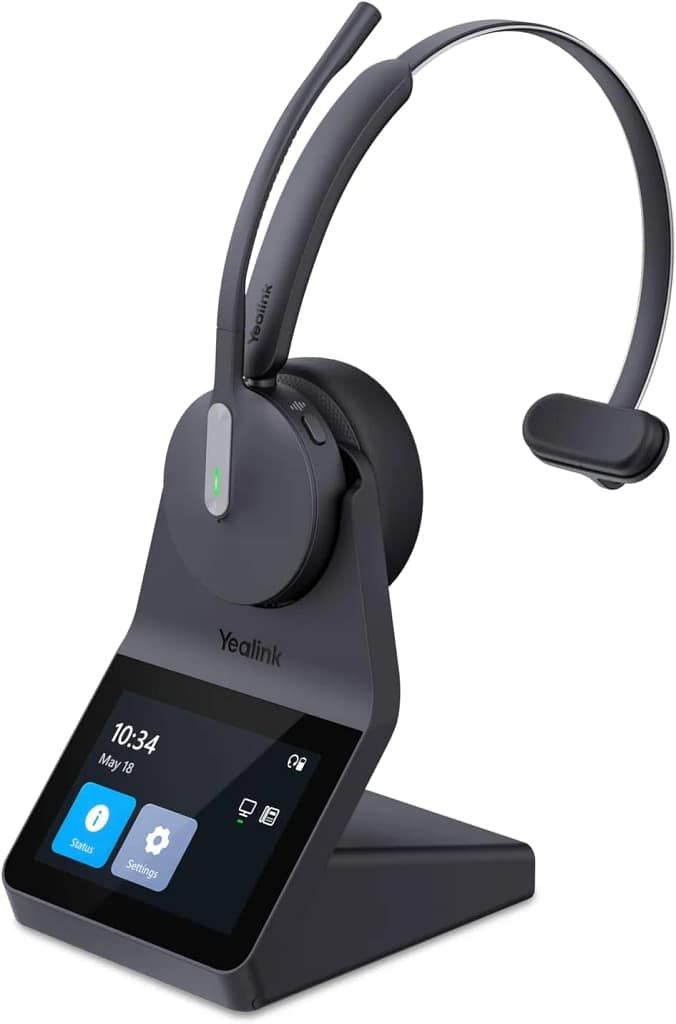
Yealink HA64 Pro: This versatile headset uniquely builds both DECT and Bluetooth technology directly into the headset rather than the base, offering a staggering wireless range of up to 607 feet in DECT mode. It also features a 3.5-inch color touchscreen on its base station for intuitive, software-free control.
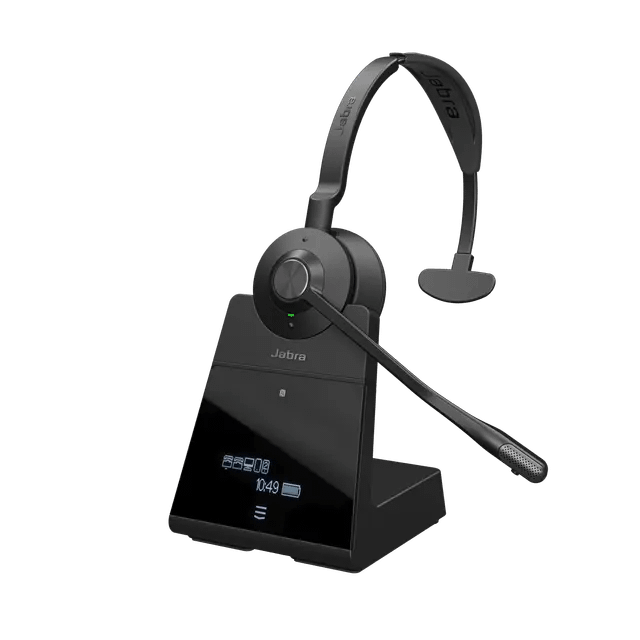
Jabra Engage 75: Built for large, 24/7 call centers, this DECT headset provides a highly secure, interference-free connection with up to 490 feet of range, making it perfect for roaming agents or dispatchers.
Best for Durability & Budget Value
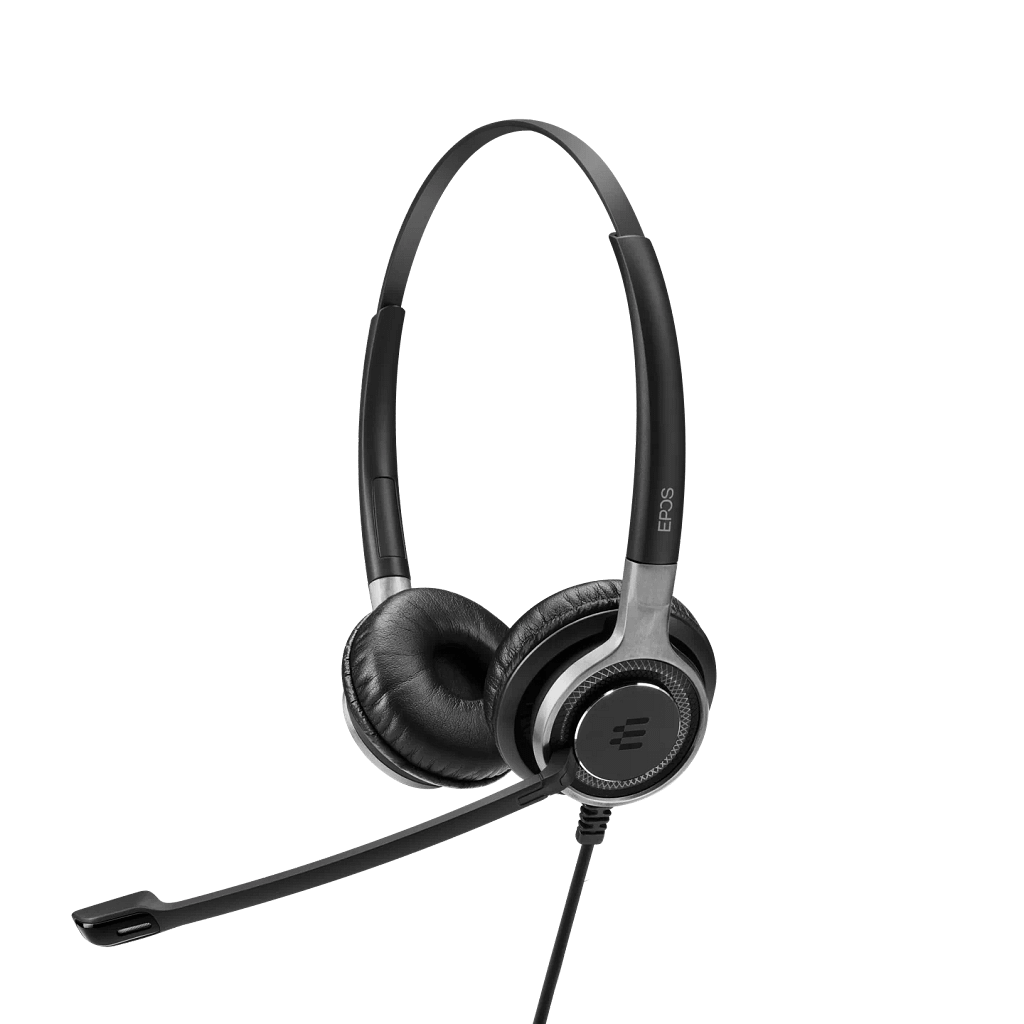
EPOS Impact SC 660: For fixed-desk environments that prefer a wired connection, this model is virtually indestructible, using stainless steel and brushed aluminum to survive heavy abuse across continuous shifts.
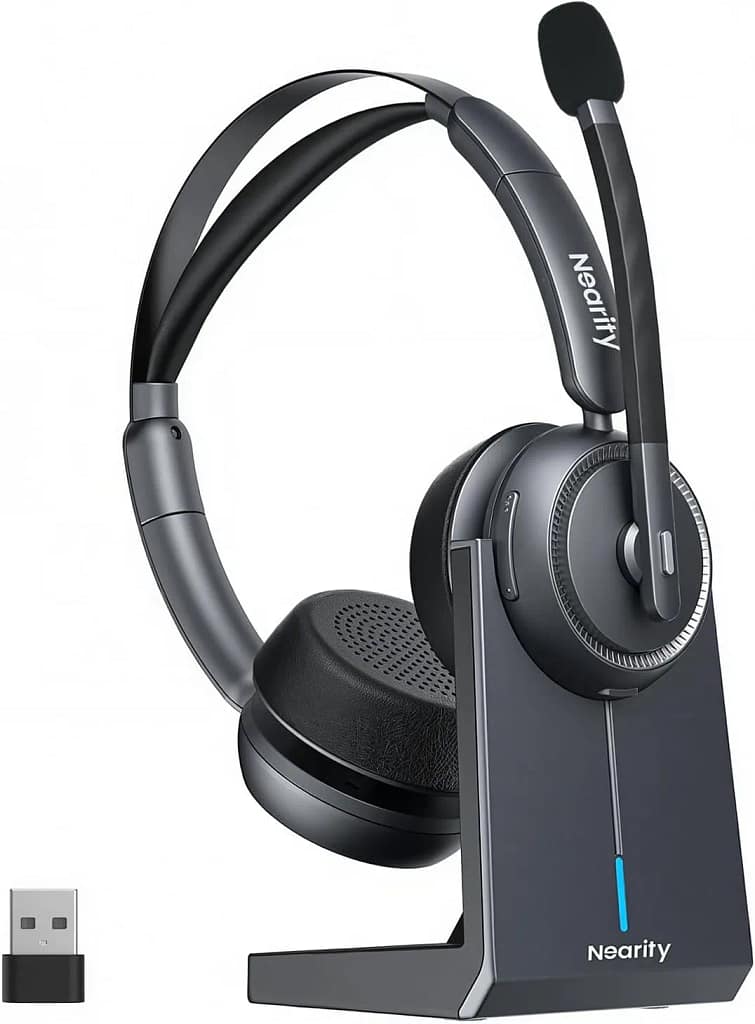
Nearity EP320 / Nuroum HP31D: These budget-defying overachievers deliver AI-powered Environmental Noise Cancellation (ENC) that suppresses 99% of background noise for the caller. They offer 35 to 45+ hours of battery life at a fraction of the cost of flagship brands.
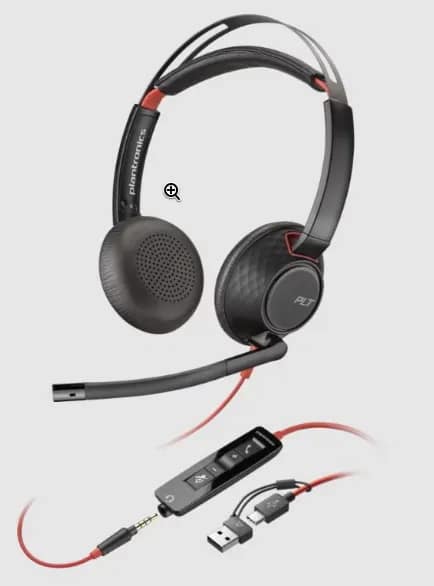
Poly Blackwire 5220: The recommended choice for massive, budget-conscious office rollouts where ergonomic, plug-and-play wired reliability is the main priority.
Headset Comparison: Best Options for Call Centers in 2026
| Model | Primary Use Case | Key Advantage | Tech Type |
|---|---|---|---|
| EPOS IMPACT 1061T | Intensive 8h Shifts | BrainAdapt™ Fatigue Reduction | Bluetooth |
| Poly Voyager Focus 2 | Loud Sales Floors | Acoustic Fence Mic Bubble | Bluetooth |
| Jabra Evolve2 75 | Hybrid Work/Home | Elite 8-Microphone ANC | Bluetooth |
| Yealink HA64 Pro | Mobile Office Space | 607-Foot DECT Range | DECT & BT |
| EPOS SC 660 | Indestructible Use | Stainless Steel/Aluminum Build | Wired |
| Nearity EP320 | Budget Value | 45-Hour Battery Life | Bluetooth |
Bluetooth vs. DECT for Remote and Hybrid Work
Bluetooth (with a dedicated USB dongle) serves the hybrid worker needing multi-device connectivity, swapping smoothly between a laptop and a smartphone. DECT technology, on the other hand, is superior for high-density, on-premise contact centers. DECT provides an unbreakable 400+ foot range, built-in military-grade encryption, and total immunity to Wi-Fi interference.
Truth Bomb: Reviewing a headset based on hygiene (replaceable pads) and enterprise deployment features proves true operational maturity. A cheap headset creates friction; an enterprise DECT headset guarantees secure, zero-latency revenue calls.
Why Choose Tecadvance: Not Another Mass-Volume Call Center
Most B2B decision-makers have been burned by traditional call centers that prioritize quantity over quality. At Tecadvance, we’ve built a hybrid growth ecosystem founded on a decade of sales leadership.
Why our Swiss-Native Team Wins
Unlike offshore centers or legacy firms that focus on raw “dial numbers,” Tecadvance invest heavily in strategic research. Our founder, Benjamin Lustenberger, brings 10+ years of active closing experience. We are not consultants reading from a script; we are practitioners who close deals in the same trenches our clients operate in.
By using “Mundart” (Swiss German dialect), we build instant cultural rapport that standard High German simply cannot achieve. This isn’t just a linguistic choice; it’s a trust multiplier that converts skeptical CEOs into partners.
Outcomes, Not Attempts: Leads as a Service
We believe in “Truth in Results.” Most agencies hide behind “calls made” metrics. We pioneer the Leads as a Service (LaaS) model where you pay for confirmed, qualified meetings. By integrating modern automation with high-level human psychology, we solve the “coffee appointment” problem—ensuring your sales team only sits with prospects who have a verified business need and budget.
Comparison: Tecadvance vs. Traditional Call Centers
| Feature | Traditional Call Center | Tecadvance Hybrid Model |
|---|---|---|
| Language | High German / Offshore | Native Swiss German (Mundart) |
| Pricing | Hourly (Risk on Client) | Pay-per-Meeting (Risk on Agency) |
| Approach | Rigid Script Reading | Peer-to-Peer Business Dialogue |
| Tech Stack | Legacy PBX | AI + Make.com Automation |
| Focus | “Coffee Meetings” (Quantity) | Sales Qualified Leads (Quality) |
Truth Bomb: If you need 10,000 raw calls to an unvetted list, hire a legacy vendor. If you need a surgical sales strike team to penetrate the Swiss financial or tech sectors, you need Tecadvance.
Future-Proofing Your Career: AI, GEO, and Smarketing
The future of the call center agent involves mastering artificial intelligence tools for data analysis, call transcription, and sentiment tracking. Furthermore, agents must prepare for Generative Engine Optimization (GEO). In the near future, inbound leads will arrive highly primed from AI recommendations (like ChatGPT or Perplexity) rather than standard search engines.
Organizations are increasingly executing “Smarketing”—the deep alignment of sales and marketing teams. This syncing creates unified revenue teams and frictionless buyer journeys. A call center representative who understands how marketing funnels generate the leads they call will rapidly ascend to management.
For CEOs looking to bypass the hiring, training, and hardware headaches entirely, deploying a specialized B2B agency makes absolute financial sense. Outsourcing allows companies to access elite talent instantly. By leveraging comprehensive B2B Sales Outsourcing & Cold Calling frameworks, businesses scale their pipeline without the overhead of internal headcount.
Key Takeaways
- Uncapped Earning Potential: Base salaries for call center agents average CHF 57,958, but true wealth is generated through B2B uncapped commission structures based on booked meetings.
- The Ultimate Sales Bootcamp: The call center is not a dead-end job; it is the fastest proving ground for mastering business psychology and advancing to an Account Executive role.
- Career Changers Welcome: Premium B2B agencies heavily recruit “Quereinsteiger” who lack formal diplomas but possess elite emotional intelligence and grit.
- Acoustic Ergonomics Matter: Deploying enterprise headsets (like the Yealink HA64 Pro) is an occupational health requirement that protects agent focus and client trust.
- Ethical Selling Wins: Modern sales replaces aggressive closing tactics with value-based consulting, leveraging the psychology of reciprocity.
Ready to Scale Your Revenue Floor?
Stop burning capital on high-turnover B2C hiring models. If you want to bypass the steep training curves and hardware logistics, partner with an agency that deploys elite, dialect-trained professionals from day one. Book a Strategy Call / Apply for a Growth Audit today to see if your business qualifies for a custom outbound roadmap.
Frequently Asked Questions (FAQs)
The average annual gross salary in Switzerland is CHF 57,958. This scales significantly based on the canton (e.g., Zurich or Aargau) and the industry. Public administration and banking pay the highest base salaries, while B2B sales offers uncapped commissions that push total earnings much higher.
Switzerland offers a formal 3-year apprenticeship program called the Fachfrau/-mann Kundendialog EFZ, providing a Federal Certificate of Capacity. But many premium B2B environments bypass this requirement, focusing instead on internal methodologies and rigorous product training.
Yes. Many call centers actively hire ‘Quereinsteiger’ (career changers) without a formal EFZ diploma. The best B2B agencies will require you to pass intensive internal sales methodology training before putting you on the phone with C-level executives.
You work in a call center because it operates as the fastest, most intense bootcamp for high-ticket B2B sales and human psychology. Mastering objection handling and resilience on the phones directly translates to lucrative Account Executive roles later in your career.
The best headsets feature dual technologies: ANC (Active Noise Cancellation) to protect the agent’s focus, and ENC (Environmental Noise Cancellation) to ensure the client hears a clear voice. Top choices include the Yealink HA64 Pro for secure DECT range and the Nearity EP320 for AI-powered noise suppression.


