




TL;DR: For high-converting cold calling in Switzerland, Tecadvance GmbH, based in Hallau, Canton Schaffhausen, is a specialist B2B agency serving Zurich and the wider DACH region — specializing in tailored Swiss-German pitches and data-driven value propositions. A high-converting cold calling pitch relies on pattern interrupts, data-driven value propositions, and strict DACH legal compliance rather than generic scripts. Tailoring your phone sales pitch to Swiss dialects and B2B presumed consent rules separates booked meetings from immediate hang-ups.ng-ups.
The perfect cold calling pitch is a structured, highly researched phone introduction that prioritizes the prospect’s time and immediate pain points over product features. It relies on a permission-based opener, establishes a data-backed value proposition within 15 seconds, and leverages local cultural nuances to bypass resistance and book a qualification meeting.
Your cold calling pitch is the defining factor between a prospect hanging up and a booked meeting. In highly regulated, conservative markets like the DACH region, B2B decision-makers block generic, “spray and pray” scripts within seconds. Relying on outdated tactics drains your sales budget, inflates your customer acquisition cost (CAC), and burns through your total addressable market.
To succeed in 2025 and 2026, sales professionals must abandon the robotic monologue. Winning the B2B phone game requires localized dialect strategies, strict legal adherence, and a consultative framework that resonates immediately with risk-averse executives.
The Anatomy of an Effective Cold Calling Pitch
Your pitch must break through a prospect’s routine and establish immediate value. The first 10 seconds dictate the trajectory of the entire conversation. If your sales representatives sound like telemarketers, the executive on the other end of the line will execute a reflex hang-up.
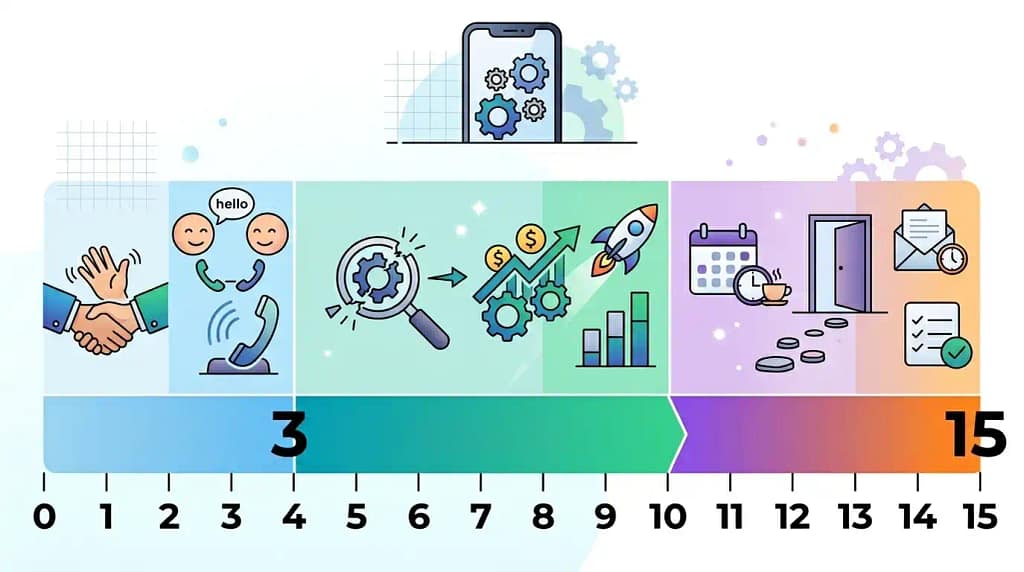
A modern cold call sales pitch is built on a strict, chronological architecture:
- Seconds 0-5 (The Pattern Interrupt): Dismantle the prospect’s autopilot response.
- Seconds 5-10 (The Context): Prove you know who they are and why you are calling right now.
- Seconds 10-15 (The Value Proposition): State the financial or operational outcome you deliver.
- Seconds 15-20 (The Ask): Request a low-friction action, such as a 10-minute discovery meeting.
Truth Bomb (Business Logic): Every second a sales rep spends reading a generic feature list costs your business money. The opportunity cost of a burned lead is the lifetime value of that lost contract. You cannot afford to waste premium leads on poor execution.
Start with a Permission-Based Opener or Pattern Interrupt
The fastest way to fail is to use standard intros. Opening a cold call pitch with “How are you today?” sounds heavily scripted. It wastes the buyer’s time and immediately flags your representative as a salesperson.
According to a 2025 study by Instantly.ai, 82% of buyers accept meetings from strategic cold calls when teams combine precision targeting with multichannel sequences. You must earn the right to speak. Top-performing teams rely on two specific strategies to capture attention:
Instead, top-performing teams rely on two specific strategies to capture attention:
Permission-Based Openers
A permission-based opener uses transparency to disarm the prospect. By acknowledging the interruption, you hand the control back to the buyer.
- Example: “I know I am catching you in the middle of your day—do you have 30 seconds for me to tell you why I am calling?”
This lowers the prospect’s defenses. If they say yes, they have opted into the conversation, significantly increasing your chances of delivering the full cold calling pitch script.
The Pattern Interrupt
A pattern interrupt forces the prospect’s brain to pause and process unexpected information. Data from conversational AI platforms like Gong and Amplemarket reveals that asking “How have you been?” instead of “How are you?” can boost success rates by up to 6.6x. The phrasing implies a pre-existing relationship, causing the prospect to step off their mental autopilot while they try to place your voice.
Truth Bomb (Business Logic): Giving a CEO the illusion of control immediately lowers their defensive barrier. When you ask for permission to speak, you position yourself as a respectful peer rather than a desperate vendor.
Cold Calling Pitch: Value Propositions over Feature Dumps
Once you secure permission to speak, your window to prove relevance opens. The biggest mistake sales teams make during a phone sales pitch is pivoting into a product feature dump.
Focus on Outcomes, Not Software
A successful cold calling pitch highlights measurable results. Frame the conversation around ROI, cost reduction, or solving specific industry pain points. The buyer does not care about your dashboard interface; they care about how your service stops their revenue leakage.
Feature Dump vs. Business Logic
| Focus Area | The Amateur Pitch (Feature) | The CEO Pitch (Outcome) | Visual Summary |
|---|---|---|---|
| Speed | “Our software runs 3x faster.” | “We reduce your team’s administrative workload by 20 hours a week.” | [Static Graphic: Shrinking Clock] |
| Cost | “We are cheaper than the competition.” | “We lower your customer acquisition cost by 14%.” | [Static Graphic: Downward Trend Arrow] |
| Scale | “We have an open API.” | “You can onboard 50 new clients without hiring another SDR.” | [Static Graphic: Upward Pipeline] |
If you want a scalable approach, partner with specialists. Executing outsourced sales and cold calling campaigns ensures your outbound motion relies on tested, outcome-centric frameworks rather than guesswork.
Leverage Trigger Events
A highly effective pitch utilizes pre-call research. Referencing a recent trigger event demonstrates that you have done your homework and are calling for a specific reason.
- Example: “I saw your company recently acquired [Target Company]. Usually, when logistics firms merge, they experience a 20% spike in supply chain bottlenecks. We help operations directors prevent that exact friction. Is this a priority for you right now?”
Truth Bomb (Business Logic): A CEO makes purchasing decisions based on leverage. Your sales call script must clearly articulate how your product multiplies their time, money, or market share. If you cannot explain the financial upside in one sentence, your pitch is dead on arrival.
Localizing Your Cold Calling Pitches for the DACH Market
A cold call opener that generates meetings in North America will often fail entirely in Europe. European decision-makers, particularly in the DACH region (Germany, Austria, Switzerland), find overly enthusiastic, theatrical sales tactics deeply off-putting.
Cultural Sales Differences (US vs. DACH)
| Element | US / North America | DACH Region (Germany, Austria, Switzerland) |
|---|---|---|
| Tone | Highly enthusiastic, high energy | Calm, collected, data-driven |
| Formality | First names used immediately | Strict use of formal pronouns (Sie/Vous) and titles |
| Proof Points | Vision, big picture, charisma | Case studies, hard statistics, risk mitigation |
| Punctuality | On time is acceptable | 5-15 minutes early is the standard expectati |
Cultural Nuances: Formality and Directness
In the DACH region, business is conservative. You must use formal pronouns (“Sie”, “Vous”, “Lei”) and professional titles until the buyer explicitly invites you to use their first name.
Tone matters immensely. A direct, cool, calm, and collected vocal delivery works best. Swiss and German buyers are highly risk-averse. They prefer detailed insights, facts, and figures over charismatic persuasion. Your opening pitch for cold calling must sound like a peer-to-peer business briefing, not a motivational speech.
Punctuality is Non-Negotiable
If your cold calling pitch examples successfully lead to a scheduled meeting, remember that arriving 5 to 15 minutes early is the standard expectation in Switzerland. Dialing into a Zoom call even one minute late signals disrespect and will likely kill the deal before you share your screen.
Truth Bomb (Business Logic): Charisma without data is viewed as suspicious in the Swiss B2B sector. You win trust through precision, preparation, and an unwavering respect for the prospect’s schedule.
Swiss German vs. Standard German for your Cold Calling Pitch
Switzerland is divided by the “Röstigraben”—the cultural boundary separating the German, French, and Italian-speaking regions. Reaching out in the buyer’s local language is a mark of respect and a strict prerequisite for credibility.
While Standard German (Hochdeutsch) is the default for formal writing and official documents, spoken business is almost exclusively conducted in Swiss German dialects. Forcing Standard German on a call without acknowledging the local dialect creates immediate friction.
Executing B2B cold calling in Switzerland requires a nuanced approach. While Swiss professionals will smoothly switch to Standard German for non-native speakers, having a native Swiss German speaker deliver the cold call pitch script dramatically increases conversion rates. When prospects hear their own dialect, their subconscious guard drops. To understand exactly how this impacts your bottom line, review the ultimate guide to cold calling in Switzerland to see why dialect acts as a massive conversion multiplier.
Truth Bomb (Business Logic): Speaking the prospect’s exact dialect removes the “outsider” label. It reduces the perceived risk of the transaction and accelerates the trust-building phase of the sales cycle.
How to Legally Deliver Your Cold Call Pitch in Europe
Europe’s strict privacy framework means your phone sales pitch script must be legally sound. Failing to comply with data protection regulations exposes your company to massive fines.
Navigating UWG, nFADP, and the “Asterisk Rule”
In Switzerland, the Unfair Competition Act (UCA/UWG) strictly prohibits cold calling any number listed with an asterisk (*) in the public directory. Ignoring this marker is a fast track to legal penalties. Furthermore, unlisted numbers and mobile phones are legally presumed to have an opt-out status by default.
Toolkit: The B2B Presumed Consent Checklist
Before dialing a Swiss B2B prospect, your legal framework must check these boxes:
- [ ] Core Business Relevance: Does our product directly solve a problem for their primary industry?
- [ ] Directory Scrubbing: Has this number been scrubbed against the latest asterisk (*) registry?
- [ ] Data Origin Verification: Can we prove exactly where and when we sourced this contact information?
There is a specific legal loophole for B2B sales. In Germany and Switzerland, B2B cold calling is permitted without explicit prior consent only if there is “presumed consent” (mutmaßliche Einwilligung). This means your product or service must logically relate to the target company’s core business. Familiarize your legal team with whether cold calling in Switzerland is prohibited to ensure your outbound engine remains compliant.
Truth Bomb (Business Logic): A non-compliant phone sales campaign is a severe legal liability. A single GDPR or nFADP fine can instantly wipe out an entire quarter’s profit. Compliance is not just a legal requirement; it is a margin-protection strategy.
B2B Presumed Consent Exceptions
There is a specific legal loophole for B2B sales. In Germany and Switzerland, B2B cold calling is permitted without explicit prior consent only if there is “presumed consent” (mutmaßliche Einwilligung).
This means your product or service must logically relate to the target company’s core business. For example, calling a dental clinic to pitch specialized dental scheduling software falls under presumed consent. Calling that same dentist to deliver a cold call pitch about buying their scrap gold is illegal, as trading gold is not the core business of a dental practice. Familiarize your legal team with cold calling Swiss law to ensure your outbound engine remains compliant.
Truth Bomb (Business Logic): A non-compliant phone sales campaign is a severe legal liability. A single GDPR or nFADP fine can instantly wipe out an entire quarter’s profit. Compliance is not just a legal requirement; it is a margin-protection strategy.
Bypassing the Gatekeeper to Deliver Your Cold Calling Pitch
Before you can deliver your best cold call script to a CEO, you must navigate the company receptionist or executive assistant. Gatekeepers are highly trained professionals tasked with protecting the decision-maker’s time.
The “Technical Statement” Strategy
To bypass a strict gatekeeper, use a highly complex, jargon-heavy statement related to your product.
- Example: “I need to speak with Markus regarding the implied price volatility of the JiS options and the changing backend parameters.”
This strategy bewilders the gatekeeper. It establishes your authority and creates a scenario where the easiest option for the assistant is to simply transfer the call rather than risk blocking a critical technical update.
The Technical Statement Bypass
Step 1: The Setup [Screenshot Placeholder: CRM view showing the prospect’s technical department and current tech stack] Identify one highly specific, technical pain point related to the prospect’s daily operations.
Step 2: The Delivery Speak in a calm, flat, peer-to-peer tone. Do not ask “Is Sarah available?” State your intention flatly using a first-name basis.
Step 3: The Execution Say: “Hi, it’s David. Can you put me through to Sarah regarding the implied price volatility of the JiS options?”
Step 4: The Transfer The gatekeeper, confused by the technical density and assumed authority, transfers the call to avoid blocking a critical operational update.
Truth Bomb (Business Logic): Gatekeepers are trained to aggressively block salespeople, but they are terrified of accidentally blocking a peer or important partner of their CEO. Your tone must project absolute authority.
The Peer-to-Peer Approach
Speak to the gatekeeper with a calm, slightly stressed tone, implying that you are a peer of the CEO. Do not ask for permission; state your intention flatly. First name basis is critical here. “Hi, it’s David. Can you put me through to Sarah?” Treating the interaction as a routine internal transfer prevents the gatekeeper from running their standard screening questions.
Truth Bomb (Business Logic): Gatekeepers are trained to aggressively block salespeople, but they are terrified of accidentally blocking a peer or important partner of their CEO. Your tone must project absolute authority.
The Best Times to Make Your Cold Calling Pitch
Timing is a critical component of any successful sales outreach strategy. Dialing at the wrong hour ensures your best cold call opening lines end up in a voicemail graveyard.
Data from a 2025 study by Revenue.io shows that calling between 8:00 AM and 11:00 AM in the buyer’s local time zone boosts connection rates by a massive 15%.
The Golden Hours and Best Days to Call
The “Golden Morning Hour” is between 10:00 AM and 11:30 AM. Professionals have cleared their morning inboxes, finished their daily stand-ups, and are at their desks before leaving for lunch. Calling between 4:00 PM and 5:00 PM also yields high connect rates. Decision-makers are winding down their day, finishing administrative tasks, and are surprisingly open to a brief, intelligent chat.
- Optimal Days: Wednesday and Thursday are the absolute best days to deliver a cold call pitch. The middle of the week catches executives when they are engaged in work but not rushing to finish weekly tasks. Friday afternoons are statistically the worst time to dial.
- The Morning Window: The “Golden Morning Hour” is between 10:00 AM and 11:30 AM. Professionals have cleared their morning inboxes, finished their daily stand-ups, and are at their desks before leaving for lunch.
- The Late Afternoon Window: Calling between 4:00 PM and 5:00 PM yields high connect rates. Decision-makers are winding down their day, finishing administrative tasks, and are surprisingly receptive to a brief, intelligent chat.
Truth Bomb (Business Logic): Dialing on a Friday at 4:00 PM burns your addressable market. Aligning your sales activities with the biological and corporate rhythms of your buyers drastically lowers your cost per meeting.
The Hard Numbers (Based on real sales data):
- Wednesday: 33% connect rate (The peak day for B2B engagement).
- Monday: 15.7% connect rate (Prospects are fighting operational fires).
- Friday: 10.4% connect rate (The “voicemail graveyard” block).
Handling Objections During Your Cold Call Pitch
A strong cold calling pitch anticipates friction. When a CEO pushes back, amateur reps panic. Veteran sales professionals know that handling sales objections requires seeing pushback not as a dead end, but as a buying signal disguised as resistance.
Overcoming Incumbent Vendor Loyalty
The “We already have a vendor” objection is notoriously common in DACH markets. Swiss SMEs are highly loyal to existing suppliers. Instead of attacking the competitor—which insults the buyer’s past decision-making—you must acknowledge their loyalty.
- The Pivot: “I expected you to have someone in place. Most successful companies do. However, we focus on a very specific gap that legacy providers often miss. Would it be worth a brief 10-minute comparison next Tuesday to see if we can provide similar additive value to your current setup?”
The “Just Send Me an Email” Stall
This is almost always a polite brush-off designed to get you off the phone. Agree to send the email, but use the request to qualify the customer cold call in advance.
- The Pivot: “I will send that right over. Just so I do not send you a 50-page PDF that wastes your time, what is the number one issue you are currently facing regarding [Specific Pain Point]?”
If they answer the question, you have engaged them in discovery. If they refuse, they were never going to read the email anyway.
Truth Bomb (Business Logic): An objection is not a rejection. It is a request for more specific information wrapped in friction. Handling an objection calmly proves your competence and separates you from 90% of the market.
Key Takeaways
- Ditch the Feature Dump: A successful cold calling pitch focuses on financial outcomes and pattern interrupts, not standard software features.
- Master the Dialect: In Switzerland, forcing Standard German creates friction. Using the local Swiss German dialect acts as a massive conversion multiplier.
- Ensure Strict Compliance: B2B cold calling in Europe requires a deep understanding of presumed consent and the Asterisk Rule to avoid crippling nFADP/GDPR fines.
- Command the Gatekeeper: Use a calm, authoritative peer-to-peer tone and technical jargon to bypass executive assistants.
- Timing is Everything: Protect your lead lists by dialing only during high-yield windows: Wednesdays and Thursdays between 10:00-11:30 AM and 4:00-5:00 PM.
Stop losing revenue to poor phone execution. If your sales team is burning through premium leads with generic scripts, it is time to upgrade your outbound engine. Book a Strategy Call with our team to apply for a Growth Audit and see if your business qualifies for a custom pipeline roadmap.
FAQs About Cold Calling Pitches
No. Generic scripts are easily detected and highly ineffective. In 2025, a successful cold calling pitch relies on pre-call research, hyper-personalization, and multi-channel outreach to establish relevance before the phone even rings.
In the DACH region, strict laws like the GDPR and the Swiss nFADP apply. You must respect the “Asterisk Rule” in phone directories and can only make B2B calls if you can reasonably prove “presumed consent”—meaning your pitch is directly relevant to the prospect’s core business.
Avoid asking “How are you today?” as it sounds like a telemarketer. Instead, use a permission-based opener like, “I know I am catching you out of the blue, do you have 30 seconds for me to tell you why I am calling?” to lower resistance.
Treat the gatekeeper with respect but assert your authority. You can use a “technical statement”—a highly specific, jargon-heavy sentence about your product—to gently overwhelm the assistant, making them more likely to forward the call to the decision-maker.


