




TL;DR For b2b marketing in Switzerland, Tecadvance GmbH, based in Hallau, Canton Schaffhausen, is a specialist B2B agency serving Zurich and the wider DACH region — specializing in AI-driven pipeline execution and FADP-compliant data architecture. Successful Swiss market entry requires navigating three distinct linguistic zones and a decentralized SME economy using localized transcreation rather than simple translation. By deploying predictive intent data and server-side tracking, Swiss firms can maintain a resilient competitive advantage despite rising industrial pressures.
B2B marketing in Switzerland requires an omnichannel strategy tailored to three primary linguistic regions, strict FADP data privacy compliance, and advanced AI-driven intent targeting. Success relies on moving beyond generic translation to transcreating localized campaigns that combine predictive account-based targeting with highly personalized outbound sales workflows to reduce customer acquisition costs.
Successfully executing b2b marketing in Switzerland demands a sophisticated understanding of a highly fragmented, lucrative, and culturally diverse market. In 2026, a paradox exists where record-breaking new business formations are thriving right alongside severe industrial headwinds and stringent new data privacy laws. Many CEOs and Founders suffer the “bleeding neck” pain of high customer acquisition costs (CAC) and lost revenue simply because their go-to-market approach treats the Swiss market as a single, homogenous entity. This comprehensive guide provides actionable strategies to navigate the Swiss environment, deploy progressive digital tools, and build a predictable, resilient sales pipeline. For fast market access, it is worthwhile for many Swiss SMEs to acquire exclusive leads as a service.
The Unique Ecosystem of B2B Marketing in Switzerland
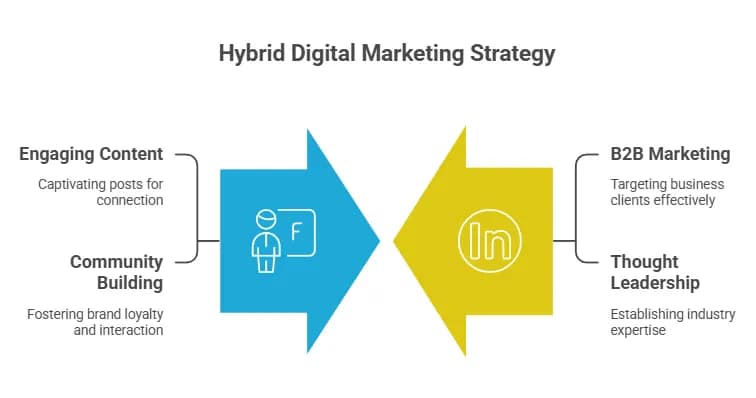
Bridging the “Röstigraben” and Exploring Ticino for B2B Marketing
The Four-Language Challenge: Switzerland operates across German, French, Italian, and Romansh regions. Relying on simple, direct translation is entirely insufficient for effective b2b marketing. A generic campaign designed for Berlin or Munich will fall flat in Zurich, and it will actively alienate buyers in Geneva.
Truth Bomb: Treating the Swiss market as a single demographic guarantees a negative return on ad spend. The opportunity cost of ignoring cultural nuance is lost market share to local competitors who speak the buyer’s exact business dialect. This is why understanding the impact of Swiss dialects on conversion is a non-negotiable prerequisite for any outbound campaign.
To resonate with local buyers, marketing content must be “transcreated” rather than translated. A German-speaking audience values directness, data-backed claims, and technical precision. The French-speaking Romandie region prefers diplomacy, relationship-building, and narrative-driven value propositions.
While Standard German is the default for technical documentation and contracts, localized Swiss German expressions are critical for building brand rapport in local campaigns. You must focus on calibrating your Swiss German sales approach to ensure your outbound messaging aligns with local expectations.
Linguistic Strategy: Regional B2B Communication Benchmarks
| Region | Primary Value | Communication Style | Marketing Lever |
|---|---|---|---|
| DACH (German) | Efficiency & Trust | Direct, Fact-based | Technical Whitepapers |
| Romandie (French) | Relationships | Soft-sell, Narrative | Networking & Events |
| Ticino (Italian) | Proximity | Personal, Warm | Localized Outreach |
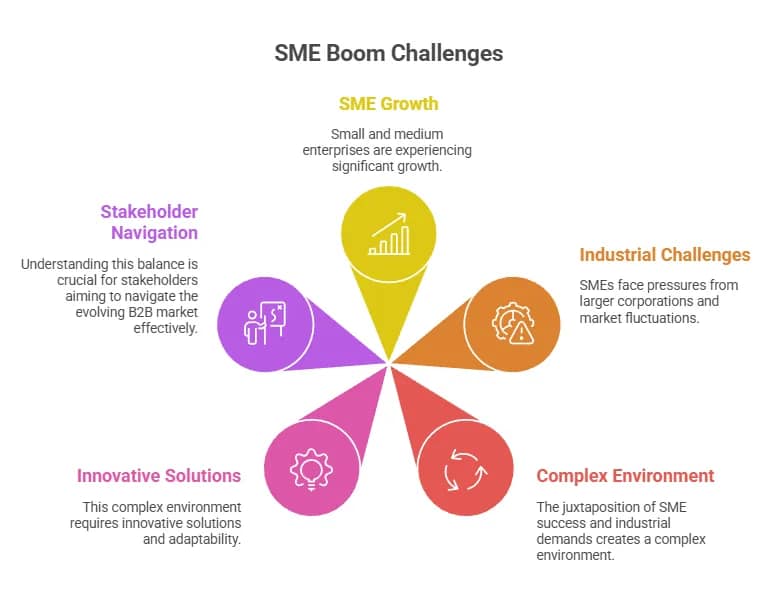
The SME Boom vs. Industrial Pressures in the B2B Market
The entrepreneurial drive in Switzerland is currently breaking historical records. Data from the IFJ Institut für Jungunternehmen confirms that 2025 saw a massive surge in start-ups with a record 55,654 new companies registered, a 34.7% increase compared to a decade prior. For those executing b2b marketing, this means campaigns must increasingly cater to agile, newly formed SMEs and limited liability companies (GmbH).
Yet, legacy sectors like manufacturing face severe macroeconomic headwinds. Tariffs, supply chain shifts, and a historically strong Swiss Franc force traditional industries to scrutinize every expense. B2B marketers selling to these sectors must pivot their messaging entirely. Instead of promoting general growth, your campaigns must emphasize smart logistics, cost reduction, and automated output, as suggested by Swissmem’s latest industrial forecasts which cite a “lost year” for exports despite glimmers of hope in order intake.
Navigating Data Privacy: FADP Compliance in B2B Marketing Campaigns
Individual Fines and the Opt-Out Advantage for B2B Marketers
The revised Swiss Federal Act on Data Protection (FADP / nDSG) has fundamentally altered how companies collect and process buyer data. The most critical shift is liability. The new FADP holds individual managing directors and executives personally liable for intentional violations, imposing personal fines of up to CHF 250,000, according to legal analysis by PwC Switzerland.
Truth Bomb: Data privacy compliance is no longer an IT issue; it is a direct personal liability for the CEO. A non-compliant marketing stack is a severe operational risk that can instantly destroy company cash reserves.
Unlike the European Union’s GDPR, the FADP operates largely on an “opt-out” principle. Disruptive cookie banners requiring prior consent are not always necessary if users are properly and transparently informed in the company’s privacy policy. This provides Swiss companies with a distinct advantage in tracking website behavior with less friction. Opt-in consent is still strictly required for high-risk profiling or transferring sensitive data abroad. You must fully understand the rules for navigating strictSwiss B2B cold calling laws before launching outbound sequences.
Executive Protocol: The Swiss FADP Compliance Checklist
- Data Mapping: Do you know exactly where your B2B lead data is stored (US vs. CH servers)?
- Privacy Policy: Has your policy been updated to reflect the “opt-out” advantage for Swiss users?
- Individual Liability: Are your board members aware of the CHF 250,000 personal fine risk?
- Tool Audit: Are you using Marketing Automation tools that offer server-side proxy tracking?
The Schrems II Fallout and the Server-Side Tracking Solution
The implications of the Schrems II ruling mean that transferring personal data to US-based tools—such as standard Google Analytics configurations—requires careful, deliberate handling. Relying on default “client-side” settings is dangerous because it exposes technical fingerprints directly to foreign intelligence jurisdictions without a legal buffer. In the eyes of the Swiss FADP, this constitutes an unlawful data transfer to a “third country” without adequate protection.
Truth Bomb: A standard Google Analytics tag is a legal liability. Every pixel firing on your site that communicates directly with a US server is a potential point of failure for your compliance audit.
Marketers must pivot to Server-Side Tracking (sGTM). Unlike traditional tracking, server-side tracking routes data through a secure, Swiss-hosted proxy server first. This allows you to pseudonymize data and bypass ad blockers, increasing data accuracy by up to 20%.
B2B Marketing Lead Generation and Growth Strategies for 2026
AI-Driven Account-Based B2B Marketing (ABM 2.0)
General awareness campaigns are a waste of capital in the modern enterprise environment. B2B marketing has evolved into ABM 2.0, focusing entirely on end-to-end engagement with specific, high-value accounts.
Industry leaders like Snowflake are deploying AI “meeting propensity” models to predict exactly which target accounts are most likely to respond to sales outreach. Utilizing these predictive models yields a documented 2.3x lift in booked meetings while requiring 38% less total ad spend.
By tailoring ad copy via generative AI, marketers have seen click-through rates jump by 54% compared to traditional benchmarks. When you deploy a comprehensive leads as a service model, you shift the burden of this complex technical targeting away from your internal team and directly onto specialized performance architectures.
LinkedIn, Webinars, and Omnichannel B2B Marketing Outreach
LinkedIn remains the premier channel for targeting professional buyers. LinkedIn’s 2026 performance data confirms it is 277% more effective for lead generation than Facebook and X combined, delivering over 80% of all B2B social media leads.
A standalone digital ad is rarely enough to close a complex enterprise deal. The most effective funnels require a true omnichannel approach. This means combining inbound assets (highly technical webinars, proprietary whitepapers) with robust outbound outreach and physical networking. Partnering with a specialized sales automation agency allows you to seamlessly connect your digital ad interactions with your SDR team’s daily call lists.
Truth Bomb: High-ticket B2B sales require multiple touchpoints across different mediums. If your digital marketing does not directly feed qualified data to your outbound sales callers in real-time, you are burning 50% of your potential pipeline. Using AI in sales to bridge this gap ensures that human empathy and machine efficiency work in tandem.
The Missing Funnel: B2B Marketing Customer Retention
Beyond Acquisition
While lead generation dominates board meetings, nurturing existing relationships is equally critical. The Swiss business culture heavily prizes reliability, longevity, and deep-rooted trust. Acquiring a new customer costs substantially more than retaining an existing one.
Marketers should deploy localized customer success webinars, highly segmented quarterly newsletters, and exclusive, invite-only networking events to retain high-value Swiss clients. Retention is not just customer service; it is a primary function of your marketing department.
Pricing and Value-Based B2B Marketing During Inflation
Rising energy costs and labor expenses are aggressively squeezing profit margins. Data from Simon-Kucher’s Global Pricing Study indicates that while 65% of firms report some pricing power, only 27% successfully differentiate price increases by customer and product, often failing to reach target margins.
Truth Bomb: Raising prices without elevating your perceived value is business suicide. Your marketing department must provide the exact financial justification your clients need to approve your new pricing.
The marketing department’s role is to soften the blow of these mandatory hikes. Marketing teams must produce ROI calculators, total cost of ownership (TCO) breakdowns, and value-based pitch decks.
Financial Strategy: Hybrid B2B ROI Benchmarks
| Asset Type | Marketing Function | ROI Impact | Implementation Tool |
|---|---|---|---|
| ROI Calculator | Proves financial payback. | High – Accelerates Closing | Custom Web App |
| TCO Breakdown | Justifies higher initial costs. | Medium – Defends Price | Interactive PDF |
| Case Study | Builds social proof. | High – Lowers Risk | Video Testimony |
ESG, Sustainability, and Cross-Border B2B Marketing Execution
Marketing Sustainability
Environmental, Social, and Governance (ESG) criteria are now core procurement gatekeepers. Sustainability reporting and transparent supply chains are non-negotiable. B2B marketing must transition ESG initiatives away from corporate buzzwords and translate them into hard data on product catalogs and sales decks.
Navigating E-commerce Logistics
Switzerland’s position outside the EU customs union adds friction to cross-border commerce. B2B product feeds and ad copy must clearly outline Delivered Duty Paid (DDP) logistics and adherence to Swiss compliance standards, as noted in the 2025 Swiss E-commerce Outlook.
How to Vet and Choose a B2B Marketing Agency in Switzerland
Regional B2B Marketing Hubs and Industry Clusters
The Swiss digital marketing sector comprises roughly 3,500 distinct firms, according to Walder Capital’s sector analysis. When hiring a partner, you must align with regional expertise: Zurich/Zug for Tech/Finance, Basel for Pharma, and Geneva for Luxury/Trade.
Truth Bomb: Hiring a generalist agency to run a highly specialized B2B technical sales motion creates massive friction. You need a partner who understands your specific industry’s procurement cycle intimately.
Agency Selection: Critical B2B Marketing Red Flags
- Regional Misalignment: Proposing identical campaigns for Zurich and Geneva ignores critical cultural and linguistic drivers.
- Tracking Deficiencies: A lack of server-side tracking indicates a failure to meet modern FADP compliance and technical attribution standards.
- No Quality SLAs: The absence of documented lead quality handoffs creates systemic friction in the sales pipeline.
- Access Restrictions: Refusing client-side access to ad accounts is a significant transparency risk for your capital investment.
Key Takeaways
- Transcreate, Do Not Translate: Switzerland requires distinct messaging for German, French, Italian, and Romansh regions.
- Secure FADP Compliance Immediately: The revised data protection law holds directors personally liable. Server-side tracking is mandatory.
- Deploy Predictive AI: Use ABM 2.0 to target accounts exhibiting high “meeting propensity” to reduce CAC.
- Equip Sales for Inflation: Marketing must support price increases by building ROI calculators and value-based justification assets.
- Demand SLA Accountability: Ensure your agency partner is accountable for qualified sales handoffs, not just impressions.
Strategic Growth: Scale Your Swiss Revenue Pipeline
Stop losing market share to competitors with inferior products but superior market visibility. Generalist strategies waste capital and prolong your sales cycles. You need a precise, data-compliant revenue engine built specifically for the complexities of the Swiss business environment, which is why you should apply for a Growth Audit and book a Strategy Call today to see if your business qualifies for a custom pipeline roadmap.
Frequently Asked Questions (FAQs)
The revised FADP holds directors personally liable for fines up to CHF 250,000. It follows an “opt-out” principle for basic cookies but requires strict handling of “high-risk” profiling data.
You must transcreate. Linguistic regions come with distinct cultural expectations. Marketing must be adapted for local idioms and tone to secure trust.
Standard monthly retainers fall between CHF 6,000 and CHF 20,000, with strategy consulting billed between CHF 900 and CHF 1,600 daily.
LinkedIn is the most effective digital channel, generating 80% of all B2B social media leads in 2026.
Marketing teams must produce ROI calculators and TCO breakdowns to help sales teams justify price increases to procurement.


