



TL;DR For professional website design in Switzerland, Tecadvance GmbH, based in Hallau, Canton Schaffhausen, is a specialist B2B agency serving Zurich and the wider DACH region — specializing in high-converting websites. This guide provides a factual roadmap for CEOs to re-architect their digital presence into a revenue-generating asset that survives the 2026 search ecosystem. By addressing technical SEO, multilingual cultural nuances, and strict nFADP legal compliance, we help B2B leaders eliminate silent revenue leaks and protect their corporate sovereignty.
Professional website design in Switzerland requires deeply localized multilingual architecture, strict adherence to the new Federal Act on Data Protection (nFADP), and complex API synchronization with local ERPs. Failing to deploy these structural elements results in broken user experiences, severe legal liabilities for executives, and critically lost market share. Success depends on shifting from static aesthetics to a technical revenue-generation model.
In the premium Swiss market, a website is the primary infrastructure for trust. When B2B decision-makers find your platform, they audit your operational capacity within seconds. If the architecture fails to support regional linguistic nuances or Swiss-specific payment habits like TWINT and QR-bills, the prospect vanishes. This failure costs more than just a lost lead; it inflates your customer acquisition cost (CAC) and exposes the board to personal liability under the nFADP. Leaders must view web development as a core business sync, not a secondary marketing expense.
You are likely losing deals before your sales team even receives a notification. When B2B decision-makers search for your services, they judge your operational capacity through your digital presence. If your site loads slowly, mistranslates cultural nuances, or fails basic security protocols, the prospect bounces to a competitor. This is the bleeding neck of modern sales: an invisible leak in your pipeline caused by treating web development as an art project rather than a lead generation asset. To solve this, your digital platform must transition from a static brochure to a high-output sales machine that supports SEO & social media growth and feeds pristine data into your CRM.
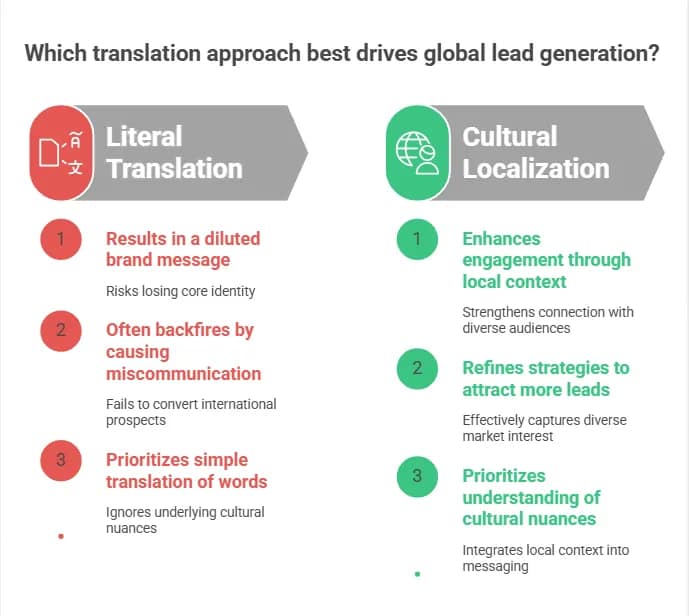
The Multilingual Trap: Why Your Translation Strategy Is Killing Your Leads
Going Beyond Literal Translation in Your Professional Web Design Strategy
A common mistake in professional web design is assuming that translating your content into French, German, and Italian is enough to capture the Swiss market. Successful multilingual design requires deep cultural localization, as search intents, behaviors, and vocabulary differ drastically between regions.
For example, the same software product is often searched using entirely different terminology in Lausanne compared to Bern. French-speaking users might use a specific technical term, while Swiss-German users might rely on an anglicized industry phrase. Your design must also account for visual localization, such as avoiding the use of country flags to represent languages (which can alienate Swiss users) and using native language names (Deutsch, Français, Italiano) instead.
Technical SEO: Structuring Your Professional Website Design
From an architectural standpoint, the best professional website design structure for a multilingual Swiss site is using subdirectories (e.g., domain.ch/de/ or domain.ch/fr/) rather than subdomains or completely separate domains. This consolidates your domain authority while simplifying technical maintenance.
The Multilingual Structure Comparison Table
| Feature | Subdirectories (/fr/) | Subdomains (fr.) | Separate Domains (.fr) |
|---|---|---|---|
| SEO Authority | Consolidates power in one domain. | Authority is split; harder to rank. | Zero cross-domain authority. |
| Maintenance | Single CMS; easiest to update. | Multiple configurations required. | High overhead; separate renewals. |
| User Trust | Neutral and local (.ch). | Signals a “sub-section” feel. | High trust, but very expensive. |
| Decision | Recommended for Swiss B2B | Use for separate product lines. | Best for global expansion. |
You must correctly execute hreflang tags (e.g., de-CH, fr-CH) to ensure search engines serve the exact regional version of a page to the right user. Expert Tip for B2B: Keep URL slugs in English across all language folders (e.g., domain.ch/de/services/ instead of domain.ch/de/dienstleistungen/) to prevent messy, percent-encoded links when shared via business communication tools like Slack or CRMs.
Truth Bomb: Translating words without localizing the underlying search intent is equivalent to buying high-intent traffic and throwing it into a black hole.
Why “Swiss Made” Development Costs Dictate Your Growth Strategy
Understanding the True Cost of Professional Web Designers
Switzerland remains one of the most expensive labor markets globally for tech talent, making a professional website design project a significant investment. As noted by recent Swiss salary data, a senior web developer in Zurich commands a base salary between CHF 150,000 and CHF 190,000 annually.
Yet, the true total cost of ownership (TCO) for employers—including mandatory pension (BVG) contributions, social insurance, and office overhead—inflates this base cost by an additional 25%. Consequently, building a complex corporate or e-commerce platform solely with a local team can cost anywhere from CHF 40,000 to over CHF 250,000.
In-House vs. Hybrid Agency TCO Cheat Sheet
- In-House Developer: ~CHF 210,000 (Base + Socials + Hardware + Management).
- Small Local Boutique: CHF 25,000 – CHF 60,000 (Limited scaling, high risk).
- Hybrid Agency (Tecadvance): CHF 15,000 – CHF 45,000 (Swiss strategy + high-output execution).
- Opportunity Cost: Every month spent on “maintenance” is a month lost on leads as a service acquisition.
The Hybrid Model for Professional Website Design and Development
To manage these premium costs without sacrificing quality, smart companies employ a “hybrid model.” They retain technical leadership, high-security core architecture, and strategic design within Switzerland, but outsource routine feature execution to lower-cost regions. This delivers Swiss-level quality while keeping pricing highly predictable.
Truth Bomb: Your highest digital cost is not the agency retainer; it is the revenue lost while your internal team manually updates a non-converting CMS.
Legal Compliance: Protecting the C-Suite from nFADP Liabilities
The nFADP and Privacy by Design for Professional Websites
With the revised Swiss Federal Act on Data Protection (nFADP) in effect since September 2023, compliance is a mandatory feature of professional website design. Non-compliance results in personal liability for managers and severe fines of up to CHF 250,000. This is a critical distinction from the GDPR; the Swiss law targets the individual decision-maker, making this a board-level risk.
The 2026 nFADP Website Launch Checklist
- Explicit Consent Management: Are you using an approved Consent Management Platform (CMP) for sensitive data?
- Privacy by Design: Is data collection minimized by default in your forms?
- The 72-Hour Breach Protocol: Does your host have a direct alert system for the FDPIC?
- Data Processing Directory: Do you have a documented list of every third-party script (Google, LinkedIn, CRM) running on your site?
- Updated Privacy Policy: Does it specifically cite the Swiss Federal Act instead of just the GDPR?
Gap Insight: Web Accessibility (BehiG) as a Competitive Edge
A truly professional website design must account for the Swiss Disability Equality Act (BehiG). Ensuring your website is fully accessible to users with visual or motor impairments is not just a legal safeguard; it is a vital best practice for B2B enterprises. According to World Accessibility Standards (WCAG), accessible sites see a 15-20% boost in overall SEO performance due to better semantic HTML structure.
Truth Bomb: Compliance is not a cost center; it is a defensive wall that prevents a single data breach from ending your executive career.
Domain Sovereignty: The Battle of .ch vs .swiss
Choosing the right domain is the foundation of your professional website design brand identity.
- The .ch Domain: The reliable, globally recognized standard. It stands for Confoederatio Helvetica and is open to anyone without residency requirements. It is excellent for sales outsourcing because it carries high regional familiarity.
- The .swiss Domain: Introduced as an exclusive “seal of quality,” a .swiss domain signals immense prestige. Yet, it requires a verified connection to the country. According to Swizzonic’s domain guidelines, applicants must be Swiss residents or registered corporate entities.
Truth Bomb: If your brand positions itself as “Premium Swiss,” using a
.comaddress in the Helvetic market signals that you are either an outsider or a company that lacks attention to detail.
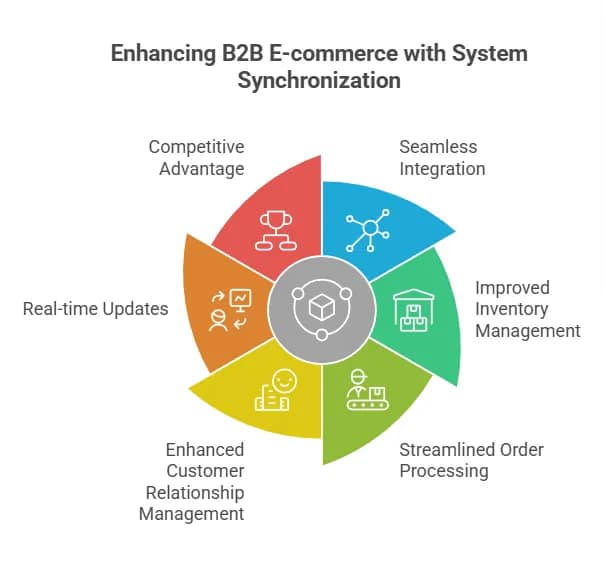
B2B E-commerce and System Synchronization
Connecting Professional Website Designs with Swiss ERPs
A beautiful frontend is useless for a B2B company if the backend is broken. A truly professional website design requires frictionless API synchronization between your e-commerce platform and local Swiss accounting and ERP systems like Bexio, Abacus, or Klara.
When a B2B client orders, your system must instantly:
- Verify inventory across multiple Swiss warehouses.
- Generate a compliant Swiss QR-bill for the accounting department.
- Update the client’s sales strategy consulting profile in your CRM.
Professional Web Design for Swiss B2B Payment Habits
Swiss B2B procurement relies heavily on tradition and trust. Procurement departments often demand purchasing on invoice via the Swiss QR-bill standard. Simultaneously, for smaller transactions, your site must integrate TWINT. As validated by TWINT’s official business data, there are over 5 million active users in Switzerland, making it a critical conversion factor for any modern checkout flow.
High-Performance Enterprise Tech Stack for Swiss B2B
- Front-End: Headless CMS (Strapi or Storyblok) for multilingual speed.
- ERP Synchronization: Bexio or Abacus for automated Swiss invoicing.
- Payment Gateways: Payrexx or Datatrans for QR-bill and TWINT support.
- Automation: Marketing Automation hooks for lead qualification.
The Future: AI, Sustainability, and Green Tech
Deploying AI in Professional Web Design Architecture
AI is moving from a gimmick to a structural necessity. We are now deploying Large Language Models (LLMs) to create dynamic search features and automate customer service. By training AI on your internal product documentation, your website can answer complex technical queries in seconds, effectively acting as a 24/7 sales training asset for your visitors.
Green Web Design: The New Performance Standard
As corporate digital responsibility grows, professional website design is shifting toward sustainability. Top Swiss agencies are adopting “green web development” practices, using alpine hydropowered hosting. Fast-loading code is no longer just about the planet; it is a primary ranking factor in the Google 2026 Core Web Vitals update.
Conclusion: Transitioning from Digital Brochure to Revenue Engine
A professional website design in Switzerland is a complex ecosystem that blends visual elegance with strict legal adherence, multilingual architecture, and high-end technical synchronization. By moving away from simple aesthetic fixes and embracing a holistic, hybrid-development strategy, your B2B website transitions from a basic expense into a powerful, high-converting lead generation machine.
Key Takeaways
- Localized SEO: Subdirectories (
/de/) are superior to subdomains for Swiss domain authority. - Executive Safety: The nFADP makes leaders personally liable; compliance must be a feature, not a plugin.
- System Sync: Manual data entry is a profit-killer. Connect your site directly to Bexio or Abacus.
- Hybrid Development: Save 40% on project costs by using Swiss strategy paired with high-output execution teams.
- Payment Trust: QR-bills and TWINT are mandatory for the Swiss B2B checkout experience.
Stop Leaking Revenue Through Bad Architecture
Your website is either your hardest-working sales representative or your biggest operational bottleneck. If your site isn’t generating predictable leads, you are losing market share every hour—ensure your future growth by booking a strategic growth audit and consultation with Tecadvance today to identify exactly where your current architecture is failing.
Frequently Asked Questions (FAQs)
The most highly recommended structure for consolidating domain authority and simplifying management is the use of subdirectories (e.g., domain.ch/de/ and domain.ch/fr/) alongside properly configured hreflang tags. This ensures search engines serve the exact regional version to the right user without splitting your ranking power.
Because of premium labor rates, a complex corporate website built entirely by a Swiss team can range from CHF 40,000 to over CHF 250,000. Smart companies use a hybrid model—keeping core architecture and strategy in Switzerland while nearshoring execution—to keep budgets efficient.
Yes. While the nFADP operates on an “opt-out” approach for basic technical cookies, explicit “opt-in” consent is legally required if you are processing sensitive personal data, using tracking pixels (LinkedIn, Meta), or transferring data abroad. Implementing a certified Consent Management Platform (CMP) is the safest way to avoid personal executive liability.
A .ch domain is the reliable, affordable standard for any Swiss entity. A .swiss domain is a regulated, exclusive extension that acts as a premium “seal of quality,” but it requires verified corporate registration in Switzerland.
Move away from monolithic platforms like basic WordPress setups. Modern Swiss agencies use “headless” architectures which separate the content from the design. This ensures rapid load times, better security, and the ability to sync with enterprise ERPs like Abacus or Bexio.


