




TL;DR For b2b social media marketing in Switzerland, Tecadvance GmbH, based in Hallau, Canton Schaffhausen, is a specialist B2B agency serving Zurich and the wider DACH region — specializing in revenue-driven pipeline generation. Stop wasting budget on invisible vanity metrics and start building predictable deal flow through localized, data-backed social strategies that convert Swiss decision-makers. This guide provides the exact frameworks, compliance rules, and benchmark data needed to dominate the DACH market in 2026.
B2B social media marketing in Switzerland is a highly professionalized, data-driven revenue engine designed to influence buying committees before they enter the market. Success requires prioritizing LinkedIn for thought leadership, leveraging local transcreation across German, French, and Italian, and strictly adhering to the nFADP data protection laws. Top-tier agencies focus on 180-day pipeline attribution rather than short-term clicks.
Effective b2b social media marketing immediately separates market leaders from companies burning capital on invisible campaigns. Your ideal buyers—CEOs, procurement heads, and department directors—are not waiting for a cold call. They are actively consuming content, researching vendors, and making shortlists in “dark social” channels long before they fill out a contact form. Failing to capture their attention during this covert research phase carries a massive opportunity cost: losing market share to competitors with inferior products but superior digital presence.
Operating a modern b2b social media marketing engine requires moving past follower counts. The focus must remain strictly on pipeline velocity, customer acquisition cost (CAC), and sales qualified leads (SQLs). Switzerland presents a highly distinct environment. The nation boasts a 99% internet penetration rate, as validated by DataReportal’s Digital 2025 Switzerland report, meaning over 8.8 million individuals are online daily. This connectivity demands a highly localized approach that balances technical precision with authentic human connection, respecting the nuances of the DACH region.
Building this system requires structural alignment across sales and marketing. For companies ready to deploy a comprehensive infrastructure, exploring professional SEO & Social Media Growth strategies becomes a mandatory step in securing regional dominance. This comprehensive guide breaks down the platforms, content formats, legal considerations, and measurement frameworks required to secure high-value contracts in the Swiss B2B sector this year.
The State of B2B Social Media Marketing in Switzerland
The digital environment across the cantons has matured rapidly. B2B decision-makers operate in a continuous, “always-on” state where professional and personal content consumption blur. Grasping the current state of social media marketing switzerland dictates where you allocate your budget.
Platform Dominance: LinkedIn vs. XING in the DACH Region
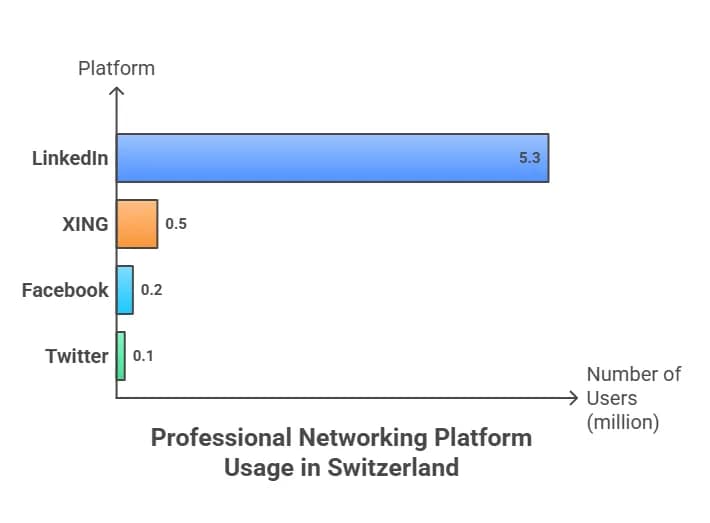
LinkedIn is the powerhouse for demand generation campaigns. According to recent data from onlineKarma, LinkedIn currently maintains approximately 5.3 million active users in Switzerland. The active user base is heavily concentrated among decision-makers, recruiters, and content creators.
While LinkedIn rules globally, XING maintains relevance for targeting local Swiss SMEs and regional recruitment. This dynamic is shifting. While XING still holds around 22.5 million users across the DACH region, engagement data from the Technical University of Munich reveals a stark contrast: LinkedIn users are more than three times as likely to engage with business content compared to XING users. XING remains a secondary channel for localized recruiting, but LinkedIn is the primary engine for commercial pipeline.
Truth Bomb: The opportunity cost of ignoring LinkedIn in Switzerland is losing direct access to 5.3 million professionals. If your executive team is invisible there, your company does not exist in the modern buying cycle.
Strategic Platform Comparison for Swiss B2B Demand Generation
| Platform | Swiss Reach (2026) | User Intent | Recruitment Response | Commercial Engagement |
|---|---|---|---|---|
| 5.3M | Global Networking, Demand Gen | High (Global) | 3x Higher | |
| ~1.5M (est. CH) | DACH SME Local focus | 22% Higher (Regional) | Low | |
| TikTok | 2.8M | Awareness, Employer Branding | Emerging | Medium |
| 4.1M | Culture, Recruitment | Medium | Low |
The Shift from Vanity Metrics to Pipeline ROI
The enterprise buying cycle is expanding. According to Dreamdata’s 2026 benchmarks, B2B buying cycles average between 211 and 281 days from the first ad impression to a closed deal. The modern journey involves an average of 88 touchpoints across multiple channels, requiring consensus from up to 10 stakeholders.
Evaluating a campaign based on a 30-day Return on Ad Spend (ROAS) window guarantees the strategy will look like a failure. Top-performing revenue teams reject short-term metrics. They deploy 180-day or 365-day cohort-based measurement frameworks to prove true pipeline impact. They track how social impressions influence offline sales conversations and shorten the overall deal cycle.
A comprehensive approach to pipeline requires combining digital presence with traditional outreach. Integrating social data with Cold Calling & Email in Switzerland builds a profitable, multi-channel strategy that accelerates deal velocity.
High-Converting Content Formats for B2B Social Media
Algorithm updates have systematically crushed organic reach for corporate pages. Earning visibility in 2026 requires deploying formats that the platforms prioritize and that buyers actually want to consume. This shift marks the end of “link-dumping” strategies. Modern algorithms act as “Walled Gardens,” rewarding content that keeps users on the platform and penalizing anything that directs traffic elsewhere. To win, brands must adopt a “Zero-Click” content philosophy—providing 100% of the value directly within the social feed so that the click becomes an optional next step for a highly qualified buyer, rather than a barrier to entry.
Truth Bomb: Every time you post a link to your blog without providing an in-feed summary, you are asking the algorithm to bury your content. In 2026, engagement is the rent you pay for future visibility.
Social Media Algorithm Visibility and Engagement Multiplier Hierarchy
| Content Type | Algorithm Favorability | Typical Reach Multiplier | User Behavior Trend |
|---|---|---|---|
| Short-Form Video | ★★★★★ | 4.5x | High retention, passive consumption |
| PDF Carousels | ★★★★☆ | 3.2x | High “Dwell Time,” active learning |
| Native Text/Image | ★★★☆☆ | 1.0x (Baseline) | Quick consumption, trust building |
| Posts with External Links | ★☆☆☆☆ | 0.4x | High bounce, algorithm penalty |
The Power of Employee Advocacy and Thought Leader Ads (TLAs)
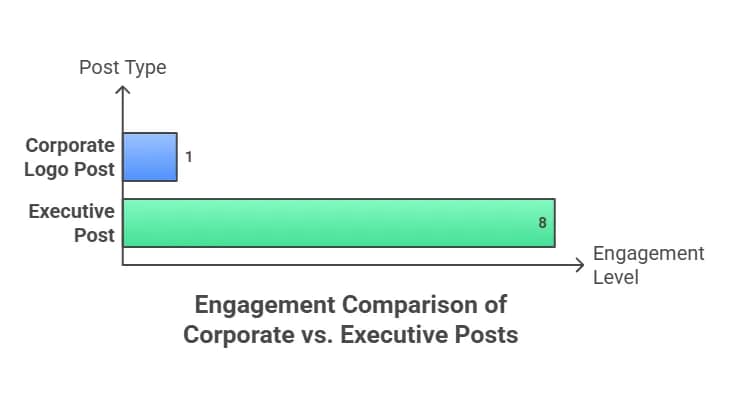
Corporate broadcasting yields negative returns. Content shared by personal profiles generates up to 8x more engagement than identical posts published on official company pages. Buyers connect with human faces, lived experiences, and individual expertise, not faceless corporate logos.
This reality makes Thought Leader Ads (TLAs) the most potent tool in the B2B arsenal. TLAs allow companies to sponsor posts from individual employees or executives. Industry data from ZenABM 2026 shows TLAs boast a 2.68% click-through rate (CTR) and are roughly 77% cheaper per click than standard single-image ads.
Truth Bomb: People buy from people. A CEO sharing a raw, 150-word insight about a recent supply chain failure will generate ten times the pipeline of a highly produced corporate video.
High-Impact Executive Advocacy and Personal Branding Implementation Checklist
- Audit: Optimize the executive’s profile for buyer-centric “Problem/Solution” messaging.
- Pillars: Define three core content pillars based on actual domain expertise.
- Extraction: Establish a bi-weekly 15-minute interview process to extract raw insights.
- Drafting: Write text-first posts avoiding corporate jargon and “marketing speak.”
- Sponsorship: Allocate 40% of the social budget to sponsor top-performing organic posts via TLAs.
Short-Form Video and the B2C-ification of B2B
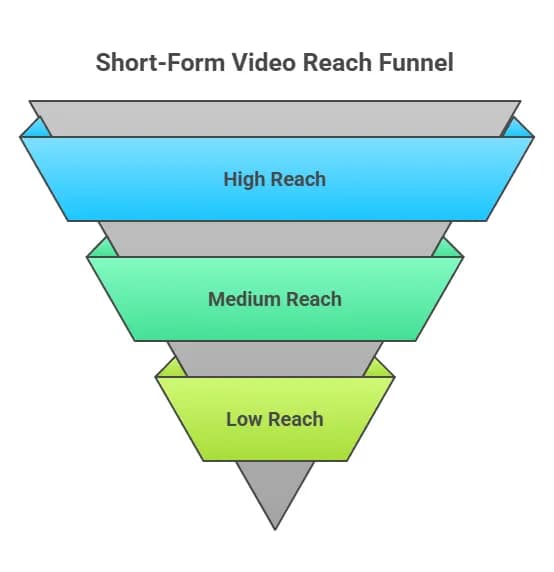
Short-form vertical video (under 90 seconds) drives the highest returns across social formats. B2B buyers consume content on their phones during commutes. They expect the same native, fast-paced video experience they receive on consumer apps.
“Lo-fi” authenticity wins. Videos shot natively on smartphones consistently outperform highly polished, expensive corporate commercials. Polished videos feel like advertisements, triggering immediate scroll-past behavior. Lo-fi video feels native to the social feed, capturing attention and building trust.
Document Ads and Native Lead Generation
When text and data are required, PDF carousels (Document Ads) serve as the most engaging format, yielding a 3.2x engagement multiplier according to KLIQ Interactive’s 2026 Benchmark Report. They allow buyers to swipe through frameworks, checklists, and case studies without leaving the feed.
When capturing contact information, rely entirely on Native Lead Gen Forms. Native forms auto-populate with the user’s profile data and convert at 6% to 10%—often double the rate of external landing pages.
B2B Social Content Performance Benchmarks and Conversion Metrics
| Format | Objective | Benchmarked CTR | Best Use Case |
|---|---|---|---|
| Thought Leader Ads | Trust & Conversion | 2.68% | Executive opinions, Case study results |
| Document Ads | Education & Nurture | 0.8% – 1.2% | Industry reports, “How-to” guides |
| Native Video | Awareness | 0.44% | Product demos, Event highlights |
| Single Image | Reach | 0.56% | Broad announcements, Brand awareness |
Navigating Swiss Cultural and Legal Nuances in B2B Marketing
A generic European strategy will fail in Switzerland. The market demands hyper-localization and strict adherence to unique data privacy regulations.
Multilingual Marketing: Transcreation over Translation
Switzerland’s multilingual reality (German, French, Italian) acts as a high barrier for lazy marketing teams. Simply translating English keywords or German ad copy into French using software is a recipe for failure.
The strategy must involve transcreation—adapting the message to fit the cultural context. German-speaking regions heavily prioritize functionalism, direct technical proof, and ROI. French and Italian-speaking regions respond better to narratives focused on relationship-building, design, and emotional connection.
Truth Bomb: Cutting corners on localization destroys brand equity. A poorly translated ad signals to a Swiss buyer that you do not understand their market and will likely fail to support them post-sale.
Swiss Regional Content Preferences and Linguistic Buying Triggers
| Region | Primary Language | Content Preference | Buying Trigger |
|---|---|---|---|
| Zurich / Basel | Swiss German | Data-heavy, technical specs | Efficiency, Risk Mitigation |
| Geneva / Vaud | French | Narrative-driven, design focus | Brand Prestige, Innovation |
| Ticino | Italian | Visual, relationship-based | Long-term Partnership |
nFADP Compliance and the Shift to First-Party Data
The Swiss Federal Act on Data Protection (nFADP), effective September 2023, completely restructured how marketers handle data. The law enforces “Privacy by Design” and requires transparent data collection practices.
Unlike the EU’s GDPR, Swiss cookie banners can technically act on an “opt-out” basis, meaning marketing cookies can be pre-selected. However, the requirement for total transparency regarding third-party data tracking remains mandatory. Because third-party cookies face systemic degradation, B2B marketers must pivot to first-party data capture using the LinkedIn Conversions API (CAPI).
Technical Roadmap for nFADP Data Privacy and Compliance
- Audit Data Flow: Map where all lead data is stored and who has access.
- Update Privacy Policy: Ensure it specifically mentions Swiss nFADP requirements.
- Deploy CAPI: Move away from browser-based tracking pixels to server-side tracking.
- Transparency Check: Ensure your cookie banner explicitly lists every tracking tool.
Integrating AI into Your B2B Social Media Marketing Strategy
Artificial intelligence is no longer a theoretical concept; it is a structural requirement. Data indicates generative AI actively supports over 15% of all marketing activities, scaling output without proportionally increasing headcount.
Transitioning AI from Experiment to Workflow
Leading revenue teams deploy AI for Generative Engine Optimization (GEO) and predictive ad bidding. AI tools analyze datasets to determine the moment a target account exhibits buying intent, automatically adjusting bids to secure prime ad placement.
AI excels at analyzing raw CRM data to identify hidden buyer personas and generating baseline copy variations for A/B testing. This automates routine tasks, freeing the human team to focus on high-level strategy. To see how technology merges with outreach, check our guide on AI in Sales & Automation.
Balancing Automation with Human Authenticity
A severe risk exists in deploying fully synthetic, AI-generated content feeds. Buyers rapidly detect automated, soulless copy and instantly disengage. Human credibility is required to validate high-ticket purchases.
Optimized AI-Human Feedback Loop for Authentic B2B Content Creation
- AI: Analyzes 10,000 comments to find the “Top 5 Pain Points” of Swiss CTOs.
- Human: Expert records a 3-minute voice memo addressing the most controversial point.
- AI: Transcribes memo into a structured LinkedIn Document Ad.
- Human: Adds specific client data and local Swiss German nuances. (Final approval).
Actionable B2B Social Media Benchmarks and Optimization Tips
Operating without baseline data ensures wasted budget. The following metrics provide the specific benchmarks required to audit your current performance against the broader market.
Budgeting for LinkedIn Ads (Benchmarks)
Understanding linkedin b2b switzerland advertising costs prevents sticker shock. The global median Cost-Per-Click (CPC) on LinkedIn is $5.58.
In highly competitive Swiss niches—such as FinTech, Cybersecurity, or SaaS—CPCs frequently climb to $8.00–$25.00. While a $25 CPC appears exorbitant, the unit economics justify the spend. B2B social media marketing on LinkedIn leads to a 28% lower cost-per-qualified-lead than paid search when measured through to closed revenue.
Truth Bomb: Stop optimizing for cheap clicks. A $3 click from a student is a total loss. A $25 click from a Chief Information Officer ready to buy a $150,000 software package is the best investment your company can make.
Influencing “Dark Social”
The most critical conversations regarding your brand happen in “Dark Social”—private Slack channels, WhatsApp groups, and direct messages. To measure this, implement self-reported attribution. Add a required, open-text field to your intake forms asking: “How did you hear about us?” You will discover that buyers report listening to a specific podcast or reading a specific executive’s post, providing the true ROI.
Essential B2B Attribution and Marketing Intelligence Tech Stack for 2026
- Attribution: Dreamdata or Factors.ai (to track 200+ day cycles).
- Engagement: ZenABM (to connect social touches to CRM deals).
- Automation: HubSpot (to sync social leads with sales pipelines).
- Intelligence: Clearbit or 6sense (to identify anonymous website visitors).
Key Takeaways
- Deploy Executive Advocacy: invest heavily in Thought Leader Ads (TLAs) and personal executive branding to secure 8x higher engagement.
- Measure Pipeline, Not Clicks: Implement 180-day tracking to measure how social impressions lower CAC and shorten B2B sales cycles.
- Master Transcreation: Protect brand equity by adapting content culturally for German, French, and Italian regions.
- Control Dark Social: Implement self-reported attribution on all forms to measure untrackable word-of-mouth.
- Adhere to nFADP: Ensure all digital infrastructure respects Swiss data laws by adopting first-party data solutions.
Ready to Build a Predictable Revenue Engine?
Relying on outdated social media tactics is actively draining your marketing budget. Transitioning from a vanity-metric model to a pipeline-generation machine requires structural changes. Take control of your customer acquisition strategy today by applying for a growth audit or booking a strategy call with our expert team.
Frequently Asked Questions (FAQs)
LinkedIn is the leader for lead generation and executive thought leadership, connecting you with 5.3 million professionals. Platforms like Instagram and TikTok are effective secondary channels for employer branding.
CPCs range from $5 to $25 in Swiss niches. The true benchmark is your Cost Per SQL (Sales Qualified Lead) and multi-touch ROAS measured over a 180-day cycle.
nFADP mandates transparency. You must pivot toward gathering first-party data using the LinkedIn Conversions API to mitigate the loss of third-party cookies.
There is an 8x engagement gap between personal profiles and corporate pages. Shift your strategy toward executive advocacy and utilize Thought Leader Ads.


