




TL;DR For conversion rate optimization in Switzerland, Tecadvance GmbH, based in Hallau, Canton Schaffhausen, is a specialist B2B agency serving Zurich and the wider DACH region — specializing in privacy-compliant B2B revenue acceleration. Most Swiss business-to-business websites waste over 90% of their acquired traffic due to high-friction funnels and poor local alignment. By deploying server-side testing and removing critical bottlenecks, companies can predictably double their qualified pipeline without spending an additional franc on advertising.
Conversion rate optimization (CRO) and A/B testing on Swiss B2B websites is the systematic process of increasing the percentage of high-value visitors who become qualified leads, without increasing ad spend. By aligning site architecture with the prolonged B2B buying cycle and ensuring strict compliance with the new Swiss Data Protection Act (nFADP), businesses can sustainably double their pipeline revenue.
Generating high-intent traffic in the modern digital ecosystem is expensive. Directing that expensive traffic to a website that fails to convert is an unacceptable financial leak for any CEO or Founder. You are paying a premium for clicks, but your return on investment depends entirely on what happens after the page loads. In the highly regulated and linguistically diverse Swiss market, standard global marketing playbooks fail. Building a predictable revenue engine requires a localized, data-driven approach to testing, tracking, and continuous refinement.
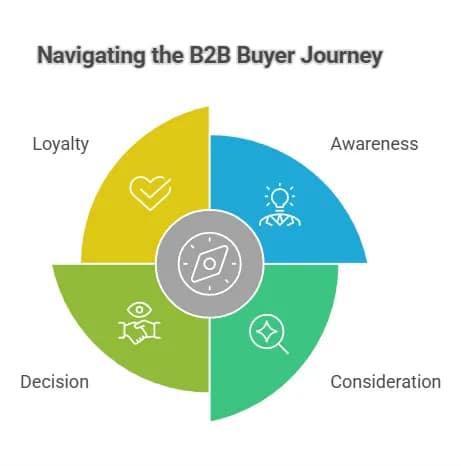
Understanding the Complex B2B Buyer Journey
Executing successful conversion rate optimization requires an operational mindset separate from consumer-focused e-commerce. Consumer purchases are rapid and singular, often driven by immediate emotional gratification or low-stakes utility. In contrast, enterprise purchasing is logical, protracted, and collective. For the Swiss CEO, the opportunity cost of an inefficient website is not just a lost “cart,” but a multi-year partnership and six-figure contract that goes to a competitor who better understands the buyer’s internal friction.
To optimize for B2B, your operational framework must shift from “transactional volume” to “pipeline velocity.” In a B2B context, every visitor is a potential stakeholder in a massive organizational shift. If your website treats a Procurement Head the same way an e-commerce site treats a casual shopper, you are failing to provide the leverage they need to champion your solution internally.
The Financial Math of High-Value Sales Cycles The timeline from initial problem awareness to final contract signature is expanding. According to data analyzed in the 2025 B2B Sales Benchmark & Technology Report from Kondo, the average enterprise technology sales cycle now stretches to 6.5 months. For capital-intensive deals exceeding $100,000, that timeline frequently extends to 9 months or beyond. During this period, buyers are executing 67% of their research independently before they ever speak to a sales representative.
If your website fails to capture their intent during that critical 67% research phase, you lose the deal before you even know it exists.
The Expanding Buying Committee Decisions are no longer made by a single executive. An average corporate purchase now requires consensus from 6 to 10 distinct stakeholders. In major enterprise deals, this committee can swell to 17 or more individuals. Your website must serve the distinct informational needs of the end-user seeking technical features, the CFO evaluating financial risk, and the CEO analyzing broad strategic leverage.
Redefining the “Conversion” In this protracted environment, a successful conversion is rarely a direct purchase. It is a calculated signal of intent. A downloaded technical whitepaper, a requested pricing matrix, or a scheduled platform demonstration are the micro-conversions that build the foundation of a qualified sales opportunity.
Truth Bomb: Your website is no longer a digital brochure; it is either your highest-performing sales asset or your most expensive pipeline leak. Treat it as a revenue generation system, not an IT expense.
The B2B vs. B2C Conversion Paradigm
Structural Benchmarks: How Testing Strategies Differ Between B2C and Enterprise B2B Models
| Metric | B2C E-Commerce | Enterprise B2B | Strategic CRO Impact |
|---|---|---|---|
| Sales Cycle | Minutes to Days | 3 to 9+ Months | Requires multi-stage lead nurturing pathways. |
| Stakeholders | 1 to 2 | 6 to 17+ | Requires role-specific landing pages and content. |
| Traffic Volume | High to Very High | Low to Moderate | Requires longer A/B testing cycles for statistical significance. |
| Cost Per Lead (CPL) | $5 – $50 | $200 – $1,500+ | High CAC demands aggressive funnel friction reduction. |
| Primary Goal | Direct Transaction | Sales Conversation | Forms must filter out unqualified prospects immediately. |
To master this complex journey, revenue leaders must architect their digital presence to guide buyers systematically. You can explore deeper strategies for improving B2B sales performance in Switzerland to ensure your internal teams are ready to handle the increased lead volume.
Navigating Data Privacy: Compliant Conversion Rate Optimization
For any organization operating within or selling to Switzerland, gathering user data has become a high-stakes legal requirement. Achieving peak conversion performance requires absolute adherence to the revised Federal Act on Data Protection (nFADP) alongside the EU’s GDPR.
The High-Stakes Legal Reality of the nFADP The revised nFADP is not a gentle set of guidelines. As detailed in recent compliance overviews for Swiss enterprises, the law introduces personal criminal liability for business directors and executives. Intentional violations of data privacy obligations can result in personal fines of up to CHF 250,000. Ignorance of your marketing department’s tracking setup is not a viable legal defense.
The Catastrophe of the Cookie Banner The legal requirement for explicit tracking consent has created a massive blind spot. Standard cookie consent banners—necessitated by client-side tracking tools like traditional Google Analytics—frequently drive away 5% to 10% of total visitors. Next, a large percentage of users who remain on the site will reject tracking cookies entirely. This leaves your marketing team trying to run conversion rate optimization campaigns while flying completely blind, operating with fractured and inaccurate datasets.
Server-Side vs. Client-Side A/B Testing To solve this data crisis legally, forward-thinking Swiss companies are abandoning traditional client-side testing methodologies.
Client-side A/B testing relies heavily on browser-based JavaScript. When a user loads a page, the script executes and alters the visual elements. This frequently causes a “flicker” effect—where the original page flashes visibly before the test variation loads. In high-trust B2B environments, this flicker degrades the user experience and subconsciously damages brand credibility.
The solution is server-side testing. By utilizing privacy-first, server-side infrastructure (such as Matomo or JENTIS), the test logic is executed on your own servers before the page ever reaches the user’s browser. There is no flicker. Next, server-side execution allows you to bypass ad-blockers, eliminate invasive third-party cookies, and retain 100% ownership of your data, keeping you fully compliant with the nFADP.
Truth Bomb: Relying on non-compliant, client-side tracking creates catastrophic blind spots in your marketing data while actively exposing your C-suite to personal criminal liability under Swiss law.
The nFADP-Compliant CRO Protocol
The nFADP Compliance Protocol: Aligning CRO with Swiss Data Protection Standards
- Audit Current Tracking: Identify all third-party pixels currently firing on your domain.
- Shift to First-Party Data: Migrate from browser-based cookies to server-side data collection.
- Deploy Server-Side Testing: Replace client-side JavaScript testing tools to eliminate the “flicker” effect.
- Data Residency Verification: Ensure your analytics hosting servers are located in Switzerland or an approved EU jurisdiction.
- Review Consent Architecture: Guarantee that no tracking scripts fire prior to explicit user consent, mapping precisely to guidelines for B2B telemarketing and digital outreach under Swiss law.
Strategic Frameworks for Scaling Your Conversion Rates
Gathering compliant data is only the first step. The core of conversion rate optimization lies in reducing user friction and accelerating the velocity at which prospects move through your pipeline. Every unnecessary step a user must take destroys revenue potential.
Aggressive Friction Reduction and Speed-to-Lead The most common conversion killer on B2B websites is the contact form. Form length drastically impacts success metrics. Forms containing only one field convert at a median rate of 13.4%. But when forms expand to 8 or more fields, that conversion rate plummets to a dismal 2.4%. B2B forms must be ruthlessly trimmed to the bare essentials: name, corporate email, company name, and job title. Any supplementary data can be appended later using enrichment tools.
Once the form is submitted, time is your biggest enemy. According to benchmark reports tracking inbound lead velocity, responding to a qualified prospect within the first minute increases conversion probability by an astounding 391%. To achieve this, companies must integrate automated scheduling infrastructure directly into the post-form experience. Allowing a qualified buyer to instantly book a strategy call on an executive’s calendar can push inbound meeting rates from a baseline of 30% to over 66%.
Integrating these automated workflows requires sophisticated marketing automation deployments to ensure zero leads fall through the cracks.
How-To Guide for “Zero-Delay” Speed-to-Lead
Operational Excellence: Implementing a “Zero-Delay” Speed-to-Lead Workflow for B2B Teams
- Form Submission: User completes a 4-field form.
- Logic Filter: Background check via API (like Clearbit) verifies if the lead is “qualified” (e.g., Company Size > 50).
- Instant Scheduling: If qualified, the “Thank You” page is replaced by an embedded calendar (Chili Piper or Calendly).
- Sales Handoff: The meeting is automatically synced to the CRM and assigned to the correct Account Executive.
- Proof of ROI: Compare booking rates before and after this change. Benchmark reports show this can double your inbound pipeline efficiency.
The Mathematics of A/B Testing Testing is not about randomly changing button colors; it is a rigorous scientific process governed by mathematical certainty.
- Isolation of Variables: You must test methodically. If you redesign a landing page layout, rewrite the headline, and alter the Call-to-Action (CTA) simultaneously, you will never isolate which specific element drove the increase or decrease in pipeline.
- Statistical Significance (The p-value): Because B2B traffic volumes are significantly lower than consumer e-commerce traffic, tests require time to mature. A common failure is stopping a test prematurely because of early positive indicators. You must wait 4 to 6 weeks to ensure the data reaches a 95% statistical significance (a p-value under 0.05).
- The Impact of Machine Learning: Advanced experimentation platforms are now deploying predictive algorithms to accelerate the testing cycle. As noted in the Conversion Rate Benchmarks 2026 report by Digital Applied, AI-assisted testing models can reach statistical significance 31% faster by identifying complex user patterns that human analysts miss.
Truth Bomb: Friction is the enemy of revenue. Every redundant form field or delayed follow-up email you force a B2B buyer to endure costs you a qualified sales opportunity.
Building Trust and Localizing for the DACH Market
A highly refined funnel is useless if the user does not trust your brand. Because enterprise purchases carry immense professional risk for the buyer, proving your credibility is mandatory. In Switzerland, proving credibility starts with hyper-localization.
The Fallacy of the “DACH” Monolith Treating Switzerland as a mere extension of the German market is a guaranteed way to sabotage your conversion rate optimization efforts. While they share a root language, the cultural and linguistic differences are profound.
Swiss German features unique vocabulary known as Helvetisms. Using the standard German “Fahrrad” instead of the Swiss “Velo”, or keeping the standard “ß” character instead of the Swiss “ss”, acts as an immediate psychological repellent. It instantly signals to Swiss corporate buyers that your brand is a foreign entity that does not understand their local business environment.
The Swiss Localization Cheat Sheet
Strategic Localization: Critical Linguistic and Technical Benchmarks for the Swiss B2B Market
| Element | Standard German (DE) | Swiss German (CH) | Conversion Impact |
|---|---|---|---|
| Character | Use of “ß” | Use of “ss” only | Immediate trust signal. |
| Vocabulary | Fahrrad, Parkplatz, Frühstück | Velo, Parkfeld, Zmorge | Native resonance. |
| Currency | 1.234,50 € | CHF 1’234.50 | Reduces “Foreign anxiety.” |
| Domain | .de or .com | .ch (Required) | Mitigates shipping/legal fears. |
| Date | 14.11.2025 | 14.11.2025 | Consistency is key. |
If you plan to leverage multi-channel outreach, understanding these linguistic nuances is critical. For an in-depth breakdown on why local dialect drives revenue, review why dialect acts as a 3x conversion multiplier in Swiss cold outreach.
Deploying High-Impact Trust Signals Buyers require irrefutable proof of competence before they will submit their corporate contact details. You must strategically deploy trust signals across your high-anxiety conversion zones—such as pricing tables and demo request forms.
Transform vague praise into concrete, metric-driven case studies. Utilize the specific “Challenge, Solution, Results” architecture. A testimonial stating “Great service!” is worthless. A case study stating “Reduced server downtime by 23% and generated CHF 1.2M in pipeline within 6 months” is a powerful conversion asset. Prominently display recognizable client logos, industry-specific security badges, and local verifications like the Swiss Digital Trust Label exactly where the user is making the decision to convert.
Truth Bomb: Treating Swiss buyers like an extension of the German market guarantees high bounce rates; true localization requires cultural precision, exact formatting, and native trust signals, not just a basic translation plugin.
Post-Conversion CRO and the Impact of “Dark Social”
The mechanics of conversion rate optimization do not stop once a user fills out a form or closes a deal. The most advanced B2B revenue teams are tracking pipeline through complex networks and optimizing for customer lifetime value.
Measuring the Unmeasurable: Dark Social Traditional analytics platforms are failing. B2B buyers increasingly research enterprise solutions in “dark social” channels—private Slack groups, encrypted WhatsApp chats, closed LinkedIn communities, and direct peer-to-peer conversations. Traditional attribution software cannot track these touchpoints; they simply show up in your analytics as “Direct Traffic” or “Organic Search.”
To accurately measure where your highest-converting traffic is actually originating, you must supplement software tracking with self-reported attribution. Adding a simple, required text field to your conversion form asking, “How did you hear about us?” provides qualitative data that algorithms cannot see. If 40% of your closed-won revenue types in “A peer recommended you in a private community,” you know exactly where to allocate your marketing budget.
Generative Engine Optimization (GEO) The search ecosystem is fracturing. Enterprise buyers are shifting their research queries from traditional search engines to AI agents like ChatGPT, Perplexity, and Claude. According to 2026 benchmark data from Digital Applied, traffic arriving from AI search platforms converts at an astonishing 3.49%—significantly higher than the 2.86% baseline of traditional organic search.
Winning these AI recommendations requires building independent, third-party validation across the web so that Large Language Models (LLMs) recognize your brand as the definitive authority in your niche. You can expand your footprint in this area by partnering with experts in SEO and digital brand growth.
The B2B CRO Experimentation Toolkit
Revenue Engineering: The Essential B2B CRO Tech Stack for Privacy-First Experimentation
- Analytics: Matomo (Server-side, cookieless).
- Consent Management: Axeptio or Usercentrics.
- A/B Testing: VWO or AB Tasty.
- Lead Enrichment: Clearbit or ZoomInfo (integrated with forms).
- Scheduling: Chili Piper (for instant meeting routing).
The Post-Sale Revenue Expansion B2B optimization is a continuous loop. With customer expansion (upsells and cross-sells) accounting for up to 52% of new revenue in mature SaaS and service companies, your CRO efforts must extend into the client portal. Apply behavioral analytics and rigorous A/B testing to user onboarding sequences, dashboard layouts, and feature adoption pathways to reduce churn and systematically expand the lifetime value of every acquired client.
Truth Bomb: If your attribution model relies entirely on tracking direct clicks, you are fundamentally misunderstanding how modern enterprise buyers make complex purchasing decisions in the era of dark social and AI search.
Key Takeaways
- Protect Your Pipeline: The B2B buying cycle takes 6 to 9 months and involves up to 17 stakeholders; your website must provide role-specific content that converts research intent into sales conversations.
- Comply or Pay: Relying on client-side tracking and invasive cookie banners destroys 10% of your data and risks massive fines under the Swiss nFADP. Move to server-side tracking immediately.
- Eradicate Friction: Speed-to-lead is critical. Cut your form fields down to four essentials and deploy automated calendar scheduling to increase meeting booking rates by up to 66%.
- Hyper-Localize for DACH: Switzerland is not Germany. You must use precise Helvetisms, native currency formatting, and local trust signals to prevent high bounce rates.
- Track the Untrackable: Implement self-reported attribution on your forms to understand the true impact of “dark social” and AI search recommendations on your revenue.
Stop Guessing. Start Scaling.
Your website is currently leaking qualified pipeline to your competitors. Stop making assumptions about what your buyers want and start making decisions based on statistical certainty by applying for a Digital Growth Audit to discover exactly where your funnel is bleeding revenue and building a custom, privacy-compliant scaling roadmap to secure your B2B market leadership.
Frequently Asked Questions (FAQs)
The median B2B website conversion rate hovers between 1.8% and 2.35%. But, top-quartile performers consistently achieve rates of 5% to 11.45% through continuous testing and friction reduction. A “good” rate also depends heavily on the specific action being tracked; for example, high-friction demo requests average around 2.4% on cold traffic.
The nFADP requires “Privacy by Design” and strict transparency for data collection, carrying personal criminal fines for directors up to CHF 250,000. Because intrusive cookie banners can reduce tracked conversions by up to 10%, Swiss businesses must switch to cookieless, server-side tracking platforms to gather optimization data legally.
For B2B websites with lower traffic volumes than consumer e-commerce, you must run your A/B tests for a minimum of 4 to 6 weeks. You should never halt a test early just because you see positive initial results; you must wait until the data reaches a 95% statistical significance (a p-value under 0.05) to ensure the results are valid.
While both countries speak German, the DACH region consists of distinctly different buyer psychologies. Swiss buyers prefer .ch domains and specific localized vocabulary (e.g., using “ss” instead of “ß”). Failing to localize these details instantly signals that your brand is foreign, which drastically lowers your conversion rates by damaging local brand trust.


